About the Project
In order to better plan work needs, the City of Bastrop, Texas required updated condition information for its 60-mile street network, summarized as Pavement Condition Index (PCI) values based on ASTM Standard D6433. The City needed this information in a format that could be effectively communicated and displayed as part of the City Geographic Information System (GIS) database.
To begin this project, we deployed our state-of-the-art Enhanced Data Gathering Equipment (EDGE) to collect detailed, spatially-referenced pavement condition data for all City-maintained streets (distress data, longitudinal and transverse profile, and multi-view Right-of-Way imagery). Then we used the data collected to determine PCIs for each of the road segments in Bastrop’s network. The PCI values and other information were added to the City’s GIS database.
Given our work, the City is able to display current information for Council review. As a value-added benefit, APTech provided a map-based viewer. This tool allows the City to see all of its collected data as it “drives” the network from their office computers. This project enhanced the City's ability to make decisions about needs, support those decisions with real data, be responsive to inquiries, and communicate specifics to stakeholders effectively and efficiently.

Knoxville-Knox County Regional Transportation Planning Organization (TPO) was in search of an experienced firm to provide it with the necessary tools to support implementation of pavement management for its member agencies. APTech was chosen to provide these services in two phases.
Phase 1 was completed over the course of 2020 and 2021 and involved the development of pavement management implementation plans for participating agencies (Maryville, Clinton, Oak Ridge, Knoxville, and Blount County). This was accomplished by informing agencies about the benefits of pavement management, developing and leading workshops, hosting follow-up discussions, and developing a Phase 2 implementation plan.
The Phase 2 plans started in 2022 and consisted of implementing pavement management systems (PMS) for participating agencies. These tasks include:
Automated condition data collection using APTech’s enhanced data gathering equipment (EDGE) van
Selecting pavement management software and assisting with its configuration and implementation
Reviewing agency treatment approaches and recommending possible improvements using preservation and maintenance
Providing additional engineering support services
Three of the agencies did not have PMS systems in place at the outset. These agencies are eager to determine and report needs using data-driven, performance-based decision processes. Two of the agencies were dissatisfied with the systems they were using, so our work greatly improved their capabilities. Given the success of this effort, the TPO has received approval for expanding this effort in fiscal years 2023 to 2026 to include re-collection of condition data and adding agencies who would like to participate.

In 2021, the North Dakota DOT (NDDOT) contracted with Applied Pavement Technology, Inc. (APTech) to update and implement its federally compliant risk-based transportation asset management plan. The plan documents NDDOT’s practices and planned investments for managing the agency’s over 17,400 lane-miles of pavement and more than 2,300 highway bridges from 2022 through 2031. NDDOT was looking for a firm that could help them streamline their Transportation Asset Management Plan (TAMP) and better connect it to its family of plans while identifying opportunities to improve asset management and capital programming processes. NDDOT is striving to develop an engaging and highly graphical TAMP that complies with Federal requirements in forty pages or less.
“NDDOT challenged us with creating a visually appealing TAMP that is less than half as long as most TAMPs. This caused us to rethink how the TAMP is organized and how required information is presented.”
— Brad Allen, P.E. • Project Manager
APTech is leading all aspects of the TAMP development, including the documentation of existing asset management processes, financial planning, life cycle planning, and risk analysis. In developing the TAMP, APTech conducted an innovative gap analysis based on future scenarios established in the NDDOT long range statewide transportation plan, Transportation Connection. These scenarios, titled Urban Centers, Rural Renaissance, Smart and Connected, and Ghost Towns, identified possible economic futures for the state. APTech developed a gap analysis that forecasted pavement and bridge conditions under each of these scenarios and compared those to forecasts based on each alternate scenario. The results are presented in the TAMP with a 2-page infographic.
As part of the TAMP update, APTech is supporting NDDOT with internal and external stakeholder outreach to map current program development processes. This involves engagement with a broad group of internal and external stakeholders including local Federal Highway Administration (FHWA) Division partners early in the TAMP development process. APTech facilitated a series of workshops and interviews with stakeholders to develop detailed process maps and identified risks and inefficiencies in current processes. Working with NDDOT Asset Management staff, APTech developed recommendations for improvements to existing business processes that led to more effective long-term investment decisions for the NDDOT. Following certification of the TAMP, APTech will work with NDDOT to implement selected improvements.
The project demonstrates the team’s ability to develop implementation guidance to support the successful transition to a risk-based, strategic approach to managing transportation assets that leverages available tools and technology. The North Dakota TAMP update does not involve services related to transportation performance management (TPM)

In 2019, APTech was awarded a contract to administer the Nevada Local Technical Assistance Program (NVLTAP). The objective of the NVLTAP is to advance local agency transportation programs and practices on a fixed, 4-year budget of $300K through training, technical assistance, technology transfer, and workforce development services.
As the program’s administrator, APTech’s responsibilities include assessing needs, identifying equitable and accessible solutions, providing technical assistance services, monitoring program progress, reporting to the NVLTAP Advisory Board, and maintaining relationships with NVLTAP stakeholders. Technical assistance services have included creating a pavement management spreadsheet tool, safety grant application support, PASER condition survey demonstrations, pavement inventory development, and local road safety plan consulting.
APTech provides NVLTAP in-person and virtual technical training to develop an effective, efficient, and innovating workforce. Training topics include pavements, bridges, workplace and traffic safety, environment, civil rights, and foundational skills. APTech schedules forty-four instructor-led courses in the NVLTAP catalog and regularly creates new courses in response to local agency needs. To manage this large course catalogue, APTech created a learning management system for participants to register for courses, complete additional self-paced courses, and track their course completion and progress towards a Road Scholar Program completion.
APTech worked with the Nevada LTAP Advisory Board to plan, promote and hold the first Nevada Asphalt Conference on February 15-16, 2023. The conference exceeded expectations and connected 183 attendees with thirteen exhibitors and expertise from across the region.

The City of Champaign, IL sought professional engineering services related to pavement management for multiple inspection cycles, starting in 2021 and running through 2028. APTech is supporting the City with several pavement management services, including:
Updating pavement condition data collection for local, collector, and arterial streets
Updating the PAVER database
Providing updates to APTech’s web-based pavement management tool, IDEA
Providing the City with comprehensive reports
Conducting any special studies as defined by the City, such as:
Evaluation of brick streets
Evaluation of premature failures
Evaluation of selected roadways for consideration of suitable repair options
Through this work, APTech has supported pavement management needs for the City since 2014. Reports are generated on an as needed basis to respond to needs such as City Council presentations. APTech’s IDEA tool has provided the City with a web-based visualization tool for their pavement management data, making it much more accessible.

APTech was selected to develop the initial 2018 Transportation Asset Management Plan (TAMP) for the Kentucky Transportation Cabinet (KYTC). In 2021, KYTC modified its contract so that APTech could further assist with the development of the agency’s 2022 TAMP update. These TAMPs are required by the Federal Highway Administration and must be updated at least every four years.
Both TAMPs documented the Cabinet’s practices for managing the state-maintained pavements and bridges. Through the process of developing the TAMPs, APTech assisted the KYTC with the development of 10-year financial plans and investment strategies that considered both risks and life cycle plan (LCP) strategies. The 2022 TAMP update incorporated KYTC’s efforts to build a resilient transportation system into its investment strategies.
The KYTC TAMP reflects the agency’s strong commitment to optimized preservation strategies that keep assets in Good condition while those in Fair condition are either improved or preserved so they do not drop into a Poor condition. While this investment strategy makes the most of available funding, the KYTC TAMP demonstrates the need for additional funding to achieve its desired state of good repair. Each TAMP serves as effective communication tool by documenting the level of funding needed and forecasting expected condition gaps if the additional funding is not obtained.
To support the implementation of asset management throughout the Cabinet, APTech provided a roadmap that outlined suggested technical, organizational, workforce development, and policy initiatives in 2018. The APTech team also facilitated a workshop for executive leadership to promote a sustainable, asset management program.
The Client's Goal
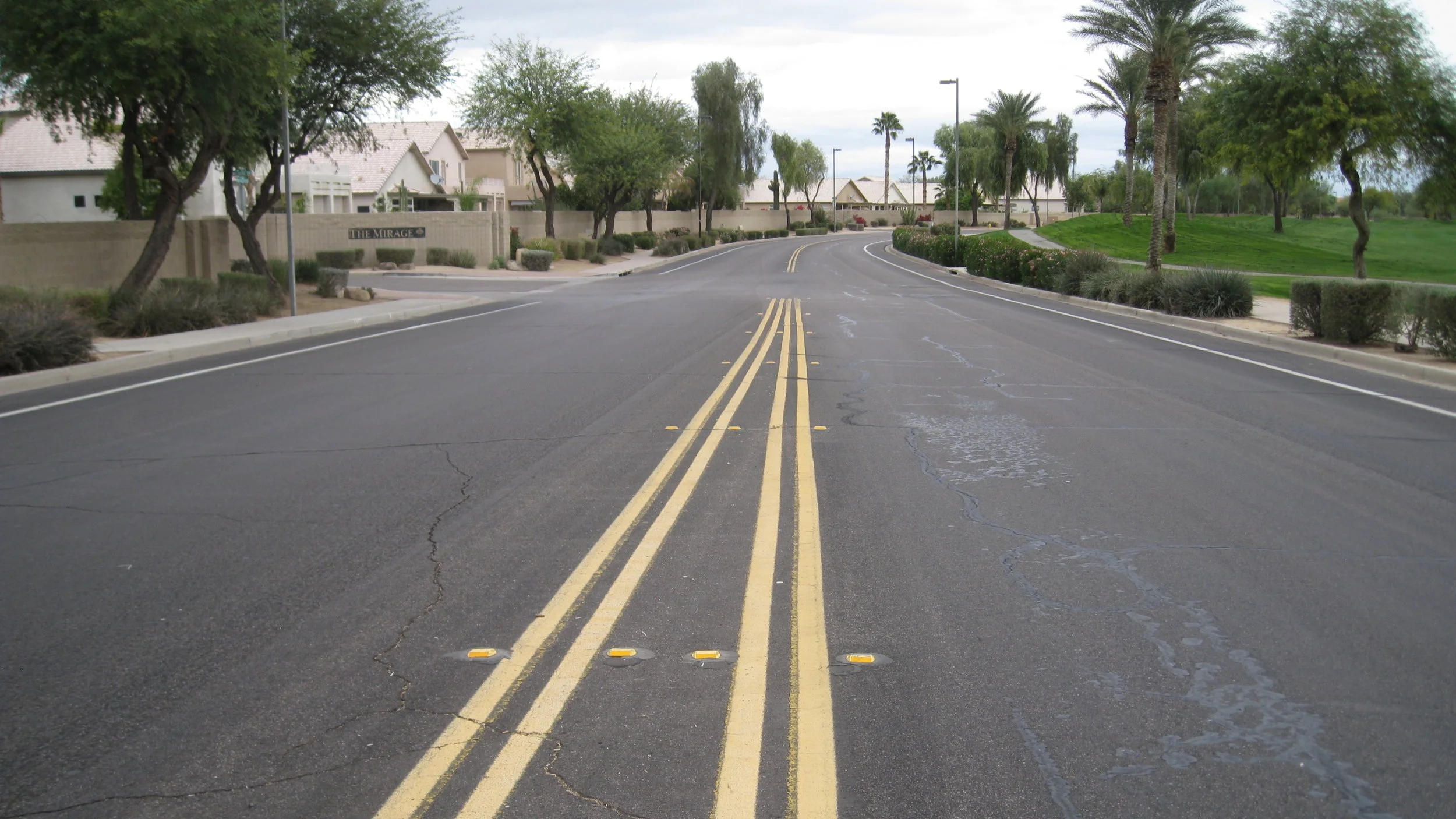
Determine if the current pavement management system will continue to meet the City's growing needs and identify ways to increase the use of pavement preservation in the City's program.
Our Work
Evaluated the current pavement management system
Provided recommendations for potential areas of improvement
Evaluated treatment strategies and the pavement management program
Prepared recommendations for annual program planning
Developed project schedule and funding scenarios
Researched treatments used by agencies in the Phoenix area
Helped develop specifications for the City
Assisted with incorporating pavement preservation strategies
Assisted developing budget needs for their program
The Outcome
Through our efforts and focused attention in this area the City of Goodyear found opportunities to improve pavement management practices and develop work plan recommendations. This allowed them to achieve their goals more efficiently. They were able to project network condition under different funding scenarios, which allowed Goodyear's decision-makers to weigh alternatives and make appropriate investment decisions to achieve performance goals. Bolstered by our recommendations, the Public Works department requested and received a funding increase of 30 percent from the City Council for its roads program.

The Client's Goal
Develop and calibrate initial performance models for Alaska Department of Transportation and Public Facilities' (DOT & PF) pavement management system (PMS) so the agency can predict performance and funding needs with greater confidence.
Our Work
Reviewed existing pavement condition data.
Organized condition data into databases linked with pavement management road segments for more accurate modeling.
Assisted the agency with defining representative pavement families and included this information in the condition databases for modeling analyses.
Worked with the PMS vendor to define reasonable and appropriate pavement families and generate performance models for rutting, longitudinal profile (IRI), and cracking that were coded into the PMS.
Coordinated with the PMS software vendor to ensure compatibility between the software, the pavement families, and the performance models.
Documented efforts in a comprehensive project report.
The Outcome
Due to APTech’s efforts, the Alaska DOT&PF was able to use historic condition data and recent cracking data to develop performance models in its new statewide PMS. Now the agency can generate reasonable projections of performance and better estimates of maintenance and repair work needs.

In 2019, the City of Miami decided to move toward a more data-driven, informed decision making process for their transportation asset needs. Rather than planning reactively, the City sought an enterprise-wide asset management system that would support cross-asset class decision making. APTech was part of a team that collaborated closely with the City to successfully deliver all aspects of this work, including collecting inventory and condition information for a wide range of transportation assets and implementing an asset management system that would allow the City to manage their assets effectively.
As part of this effort, APTech completed the automated data collection for about 700 centerline miles of City streets and assisted the City with development of pavement family definitions, along with the development of treatment protocols and performance models for each defined pavement family. APTech performed multiple budget scenario analyses using Scenario Builder and supported agency training for updates to treatment protocols and use of Scenario Builder to perform PMS analyses. In response to requests from the City, APTech also provided guidance on future updates and pavement management planning needs.
As a result of this work, the City of Miami is now able to estimate work needs and network conditions into the future, provide information to decision makers about the impact of budget adjustments, and improve their maintenance and preservation practices to make more effective use of limited resources.

In 2018, the City of Urbana (City) hired Applied Pavement Technology, Inc. (APTech) as its pavement management consultant with the goals of implementing a new pavement management system (PMS) and documenting the City’s pavement conditions. Prior to this effort, the City managed their pavement assets using spreadsheet tools for many years and was ready to use more objective and accountable processes to perform budget scenarios, prioritize work needs, and generate reports to decision makers.
As part of this effort, APTech completed condition data collection using its automated data collection vehicle (EDGE) and extracted distress data to produce pavement condition index (PCI) values for each road segment. APTech also completed condition surveys of City parking lots and shared-use bike paths. Condition data reports were provided in GIS shape files while treatment strategies and performance models were also developed. This work allowed APTech to configure PAVER to support analyses.
APTech’s work has allowed the City to be more responsive to inquiries and make better long-term plans impacting the City roadway network. The City is more accountable and proactive, resulting in more efficient use of limited resources. This project was so successful, that in 2022 the City retained APTech to continue providing similar services. These have included updating work history information and updating analysis projections from the PMS to help the City update planning documents.
In addition, the City has asked APTech to provide guidance on levels of service and appropriate treatment alternatives as it looks toward improvements in its roadway network over time.

The City of Bozeman, Montana, partnered with APTech, established two primary goals for this project. The first was to complete a pavement condition assessment for approximately 242 centerline miles of roadway and update the City’s PAVER database. The second was a detailed comparison between the 2013 assessment and this current work in an effort to assess the effectiveness of the City’s street maintenance program. The City also asked APTech to provide recommendations where appropriate for possible improvement moving forward.
APTech’s for this project work included:
Reviewing and updating the current PAVER database with new roadways and any work history done since the last update
The updated shape file was then used to prepare for condition data collection
Collecting data using the Enhanced Data Gathering Equipment (EDGE) automated data collection van
Conducting distress surveys, which identified cracking and other distresses on the images
Performing additional reviews by trained surveyors to validate the automated process and confirm the results aligned with ASTM D6433
The outcome was then tabulated by distress type, severity, and extent by road segment
Preparing the longitudinal profile, summarized as International Roughness Index, and rutting measurements
Loading the distress data and rutting into PAVER to calculate the pavement condition index (PCI)
Comparing the 2013 and current pavement conditions
This allowed APTech to comment on the effectiveness of the City’s street maintenance program
Proving treatment strategies and opportunities for improvement
The assessment provided the City with an updated PAVER pavement management system (PMS) database to use in work planning and budgeting, an objective review of maintenance program effectiveness, and recommendations for improved strategies that make more effective use of agency resources. These deliverables will help the City make accountable, data-driven, performance-based decisions about needs.
To better plan work needs, Bastrop, Texas required updated pavement condition information for its 60-mile street network, summarized as Pavement Condition Index (PCI) values based on ASTM Standard D6433. The city needed this information in a format that could be effectively communicated and could be displayed as part of its GIS database. APTech was selected to provide this service in 2018, then again in 2022.
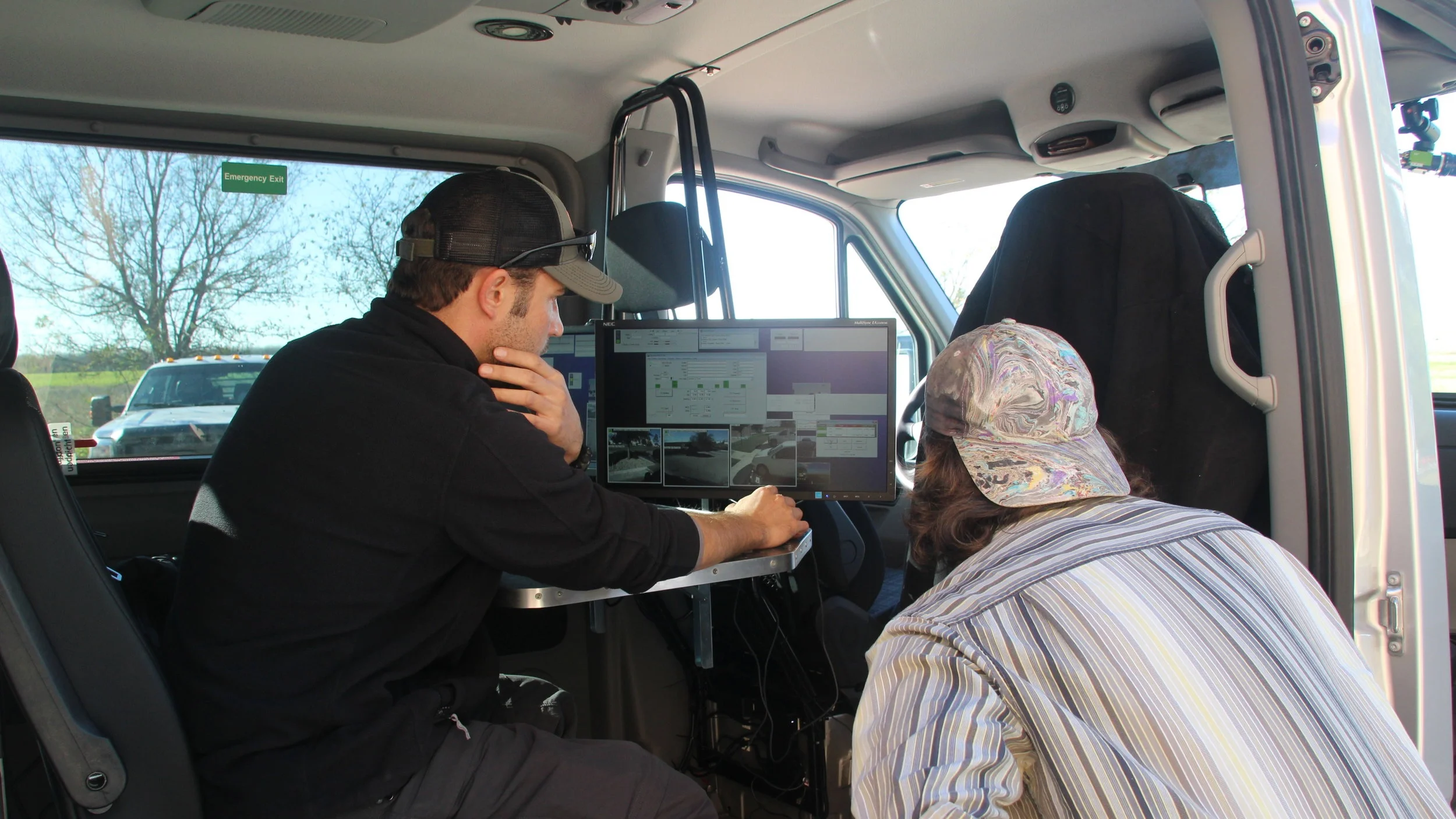
As part of this work, APTech deployed its enhanced data gathering equipment (EDGE) van to gather detailed, spatially-referenced pavement condition data for all City-maintained streets. This included distress data, longitudinal and transverse profile, and multi-view Right-of-Way imagery. APTech used the distress data to determine road segment PCI values and then added the PCI and date of data collection as attributes in the City GIS database. In the 2022 work, APTech added additional date and condition attributes so the City could compare conditions between the two data collection rounds
As a result of our work, Bastrop was able to display current information for Council review. As a value-added benefit, APTech provided a map-based viewer that allows the City to see all of its collected data as it “drives” the network from the safety of their office computers. This project enhances the City’s ability to make decisions about needs, support those decisions with real data, be responsive to inquiries, and communicate specifics to stakeholders effectively and efficiently.

APTech was hired as a subcontractor to SHI International Corp. to assist with the implementation of Cartegraph OMS for Fort Bend County, Texas. Fort Bend County has almost 2,000 miles of roads that it manages. The County is eager to proactively manage its roadway assets and support budget projections with clear, accountable, map-based information. APTech is pleased to have supported this effort and worked with the County to improve its capabilities.
APTech collected automated condition data using its enhanced data gathering equipment (EDGE) van and processed this data to produce distress and profile summaries by road segment. This data was loaded into Cartegraph and reviewed by the County for accuracy. APTech then worked with the County to establish pavement families, treatment strategies, and performance models for configuration of the PMS. Next, APTech ran initial scenarios for the County and provided training to the County in configuration of the PMS and running scenarios so it can complete analyses on its own after project completion.

For years, the Kane County Department of Transportation used Illinois’ Condition Rating System (CRS) and a proprietary pavement management system (PMS) to manage their roadway network. However, after experiencing difficulties updating the system, the County switched to a newer asset management tool, expanding on their existing relationship with Cartegraph (OMS). The County hired APTech to manage the effort and successfully implement OMS and provide training for the County.
Our work included:
Collecting condition data for the County’s 350 miles of roads using APTech’s EDGE van
Summarizing the collected data as PCI values
Configuring OMS with treatment strategies and performance models that were representative of County practice
Providing training to the County on the use of Scenario Builder to perform budget analyses and create work needs projections
Using historical condition data to assess treatment effectiveness and help the County decide which treatments were the most beneficial in terms of cost
Extracting asset information from right-of-way (ROW) imagery to update the County GIS with more complete data
The County now has the capability to perform budget scenario analyses and can produce clear presentation graphics for interaction with decision makers—a key objective of the project. Due to the success of this project, in 2022 APTech was re-selected to provide the same services in 2023.

The Mississippi DOT selected APTech to update the existing pavement management process documentation, develop a Quality Management Plan (QMP) for pavement management data collection activities, and provide recommendations for improving quality checks on pavement condition data collected by vendors.
Our work:
Reviewed the Department's existing pavement management policies and interviewing staff members.
Conducted a thorough literature review of QMPs from other agencies to develop a comprehensive Pavement Management Manual.
Developed a QMP to guide the collection of pavement condition data using both automated and manual techniques and to satisfy the requirements under the MAP-21 Act for data quality.
Developed a Technical Brief to summarize the content found in the Pavement Management Manual and the QMP as part of the Department's outreach opportunities.

In 2012, federal highway legislation commonly known as the “Moving Ahead for Progress in the 21st Century Act,” or MAP-21, was enacted to provide funding for transportation programs and establish a performance-based Federal highway program. The legislation included a requirement for States to develop “a risk-based asset management plan for the National Highway System to improve or preserve the condition of the assets and the performance of the system.” The Nevada Department of Transportation (NDOT) set out to develop a transportation asset management plan (TAMP) that both meets the MAP-21 requirements and establishes a framework for developing future plans. To accomplish this goal, the Nevada DOT selected us to develop a long-term, risk-based TAMP.
Our work included:
Evaluating the data availability and maturity for twenty-five different transportation assets managed by the Nevada DOT.
Conducting interviews with agency personnel and analyzed the resulting data with respect to its contribution to developing the TAMP.
Developing a rating process to consider factors such as the availability of inventory information, the existence of performance targets, the availability of deterioration rates, and the sophistication of financial analysis tool. The ratings were used to assign an overall level of maturity to each asset type.
Establishing a prioritization process to develop recommendations for which assets to include in the initial TAMP.
Developing a TAMP that includes pavement, bridge, and ITS assets.
The TAMP was designed to summarize inventory and condition information, to establish performance targets to be met, and to develop investment strategies that demonstrate a data-driven, cost-effective approach to maintaining and preserving transportation assets for 10 years. In addition, the steps involved in developing the TAMP were documented so they will serve as a resource for future updates to the TAMP.

The Client's Goal
Perform pavement condition surveys and develop a three-year pavement preservation plan for 43 centerline miles of publicly-owned roadways and parking lanes.
Our Work
Performed pavement condition surveys according to the Pavement Surface Evaluation and Rating (PASER) methodology.
Analyzed the PASER data.
Developed work-needs tables by year at specified budget levels.
Developed maps of work plans and projected network condition at specified budget levels.
Documented pavement condition, treatment strategies, and work plans.
The Outcome
The PASER condition surveys and pavement preservation plan developed by APTech enhance the City's ability to make data-driven decisions, respond to inquiries, and communicate current and future condition and budget impacts to stakeholders effectively.
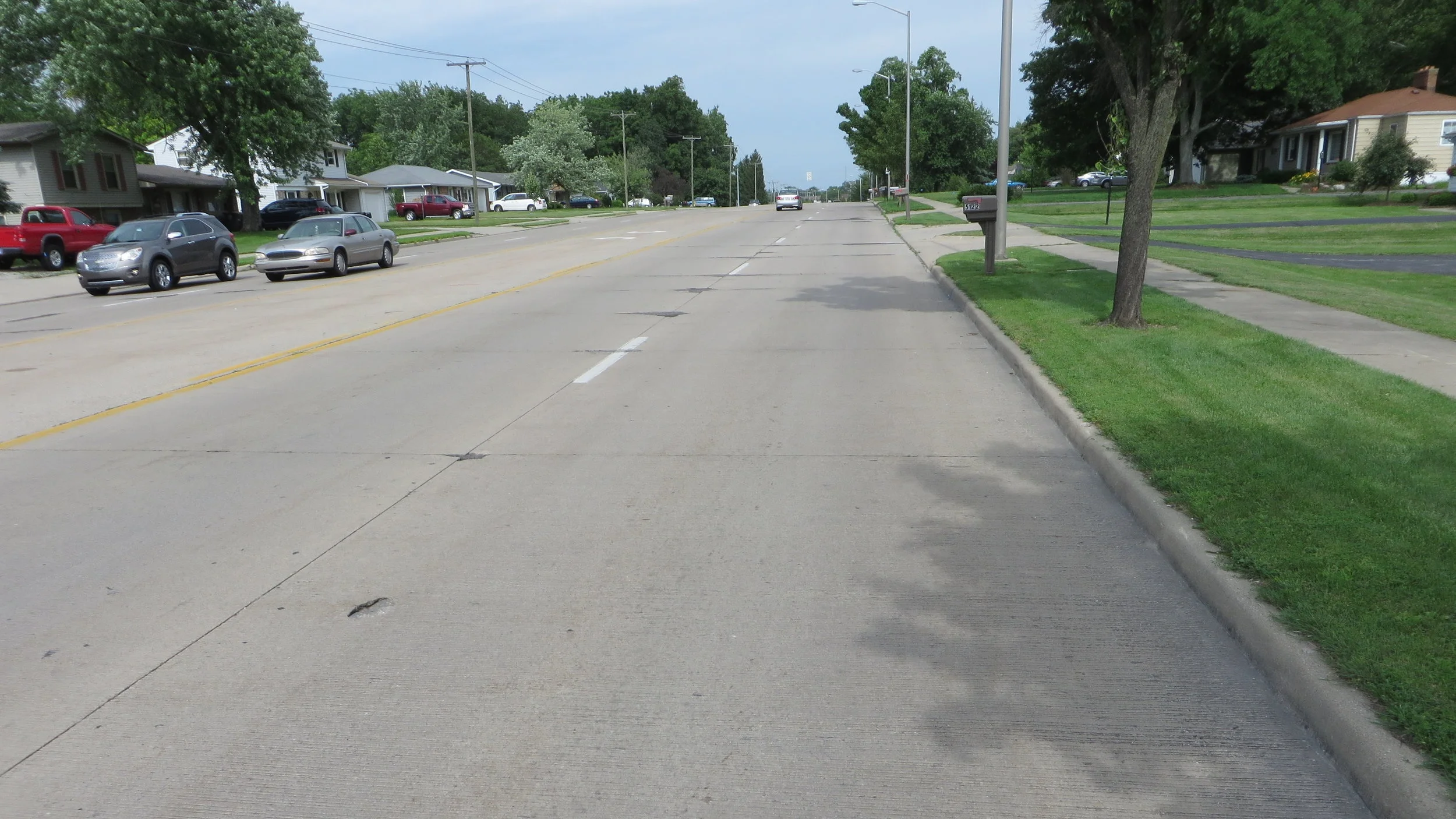
The City of Fort Wayne, Indiana selected APTech as a subcontractor to evaluate the condition of a 1.3-mile segment of East State Boulevard and develop rehabilitation design recommendations.
Our work for this project included:
Collecting and reviewing records regarding the existing pavement structure and the traffic loadings applied to the pavement.
Performing a Pavement Condition Index survey with 100 percent coverage to objectively rate the condition of the pavement.
Mapping the locations, severity levels, and amounts of pavement distresses to identify appropriate treatments and estimate quantities of treatments.
Conducting falling weight deflectometer (FWD) testing to assess the pavement's structural condition.
Developing coring and subsurface boring plans and dynamic cone penetrometer testing plans, and evaluating the test results to determine layer thicknesses, subsurface conditions, and subgrade support conditions.
Analyzing historical traffic data and developing projected traffic growth rates for pavement design development.
Quantifying the structural properties of the pavement and determining the pavement's load-carrying capacity through FWD backcalculation analysis.
Developing feasible rehabilitation design options and performing a life-cycle cost analysis to identify the most cost-effective strategy.
Summarized this information and presented a recommended rehabilitation design in a project report.
The results of the evaluation indicated that concrete pavement restoration in the form of slab replacements, partial- and full-depth portland cement concrete repairs, diamond grinding, and joint resealing, was the preferred rehabilitation strategy. The recommendation was accepted, and plans were made to implement this long-term, cost-effective approach.

We provided Clackamas County with a Transportation Asset Management (TAM) Strategic Plan within its Department of Transportation and Development (DTD). The TAM Strategic Plan focused on current assets and processes, but the long-term expectation is that the Plan will support a dynamic program that effortlessly adapts to the addition of other future assets. The TAM Strategic Plan serves as a roadmap that the DTD can use to:
Integrate all transportation data sets and tools to a consistent set of standards.
Establish and document efficient processes.
Integrate decision making across business units.
Implement effective decision support tools.
The project began by developing asset management objectives for the agency by conducting on-site workshops, leading DTD staff through a self-assessment effort, and conducting a review of current and desired information technology systems.
Using the information gathered in the previous phase, APTech worked with the agency to establish a baseline of the agency’s current TAM maturity. This was done in terms of People (organization and policies), Processes (practices and internal controls), Systems (tools and technologies), and Data (content, integration, and governance) through a combination of phone interviews, on-site workshops, and spreadsheet tools.
Next, APTech led the agency through a gap analysis effort. This was completed through on-site workshops and phone interviews to compare baselines with goals in order to identify and prioritize strategies for achieving their goals. Each strategy included action items with scope, schedule, and cost information. We then developed a roadmap document that defined the path to achieving the agency’s TAM goals. Finally we provided support to the DTD during initial implementation efforts.
The Outcome
The TAM Strategic Plan provided direction to DTD management and staff, allowing for a coordinated TAM implementation effort. The agency anticipates significantly increased funding for asset preservation, due to a newly passed State revenue bill. DTD expects the plan to facilitate integration of its maintenance and capital planning efforts, allowing the agency to make the best use of these new funds and ensure on-time delivery of future highway projects.

To promote the use of asset management and the development of asset management plans at the local level in Indiana, the Indiana LTAP contracted us to develop an Asset Management Guide for Local Agencies and to enhance the existing asset management training materials.
For phase 1 of the project, we first reviewed the existing asset management training materials and developed specific recommendations for workshop materials to foster more interaction during the workshops. We also developed a participant workbook, which included educational material, worksheets, and group activities.
During phase 2, we created a customized guidance document that introduces asset management and a five-step process for developing an asset management plan. The Guide focuses on building an asset inventory, rating asset conditions, using information to manage assets, developing a cost-effective program, and developing the plan. The Asset Management Guide for Local Agencies in Indiana was designed to be easy to read and incorporates graphics and call-out boxes to highlight important material.
Our work is being widely used by local agencies in Indiana to develop effective asset management plans and to train agency personnel.

The Ohio DOT maintains 49,078 lane miles of highway, and has identified longitudinal joint failure of their asphalt pavements as a systemic weakness. To counter that, APTech worked with ODOT to develop guidance on how to choose the most appropriate longitudinal joint repair method and how to perform it effectively and at the optimum time to produce the greatest return-on-investment.
Our work included:
Evaluating the Ohio DOT’s current longitudinal joint repair processes.
Conducting a comprehensive study of longitudinal joint repair practices by other DOTs.
Modifying existing construction specifications and designer guidance.
Developing a guidance document to assist maintenance managers in making cost-effective repair decisions.
Developing a decision tree and treatment selection tool to be included in the Ohio DOT pavement management system.
Preparing a project report to summarize findings and provide recommendations.

WisDOT’s high-priority roadways require repairs to be completed during off-peak hours with minimal lane closure durations (typically 6 to 8 hours for night-time closures). These short closure times severely limit the ability to use many conventional cementitious repair materials and methods on their concrete pavements. As a result, WisDOT has typically resorted to using asphalt concrete or rapid-setting cementitious materials for repairs of PCC pavements, neither of which has consistently resulted in durable or long-lasting repairs.
WisDOT selected Applied Pavement Technology, Inc. (APTech) to evaluate the laboratory and field performance of selected non-cementitious repair materials they have been using over the last few years and provide guidance on the selection and use of these materials for concrete pavement partial-depth repair applications.
Our work included:
Conducting field evaluations of selected non-cementitious repair materials to document prevailing condition of repair materials and surrounding concrete pavement.
Conducting coring and non-destructive testing to assess the bond condition between repair material and underlying concrete pavement.
Conducting laboratory testing to study bond and dimensional stability of repair materials at various temperatures.
Developing project report to assist WisDOT in improving policy and specifications related to non-cementitious repair materials.
View the project report here.