Featured Projects
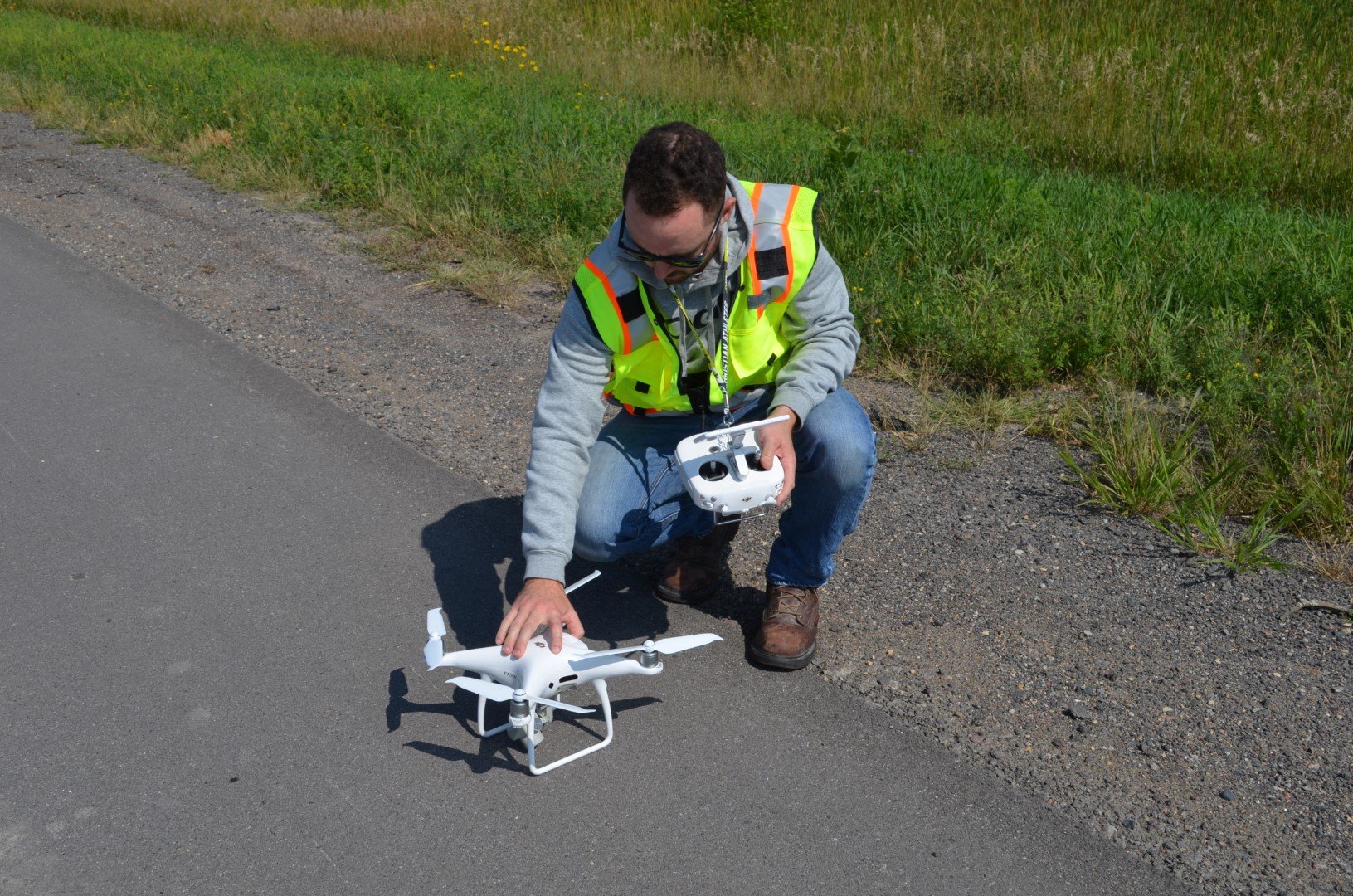
APTech, as a subcontractor to Iowa State University, is part of a team evaluating the use of small Unmanned Aircraft Systems (sUAS) to conduct airfield pavement inspections. The project includes a comprehensive review of current and emerging sUAS platforms and sUAS-mounted sensor technologies, along with the deployment of technology-platform combinations on airfield pavements to evaluate their technical specifications (i.e., performance and required criteria). This project is also providing an overview of potential standard processes and procedures for the use of sUAS for airport pavement inspection.
APTech contributed ground-truth survey results as part of a detailed field demonstration plan carried out at airports in four states. The practical lessons learned from the field demonstration projects will be captured, analyzed, and ultimately used to provide inputs to the development of a draft Advisory Circular addressing the use of sUAS to supplement airport pavement management program inspections. A final report including the research methodology and findings for the project, as well as an executive summary and list of recommendations for further research needs, will be submitted to the Federal Aviation Administration.
Key tasks include review of sUAS platforms, review of sUAS-mounted sensor technology, deployment of technology-platform combinations, development of standard sUAS processes and procedures for airport pavement inspection, contribution to ground-truth survey results, and development of reports.
Ultimately, expected outcomes from this research will include contributing to the development of standard processes and procedures, as well as technical specifications, for various types of sUAS and sUAS-mounted sensor technologies to consistently conduct safe, reliable, and effective sUAS-based airport pavement management inspections.

Knoxville-Knox County Regional Transportation Planning Organization (TPO) was in search of an experienced firm to provide it with the necessary tools to support implementation of pavement management for its member agencies. APTech was chosen to provide these services in two phases.
Phase 1 was completed over the course of 2020 and 2021 and involved the development of pavement management implementation plans for participating agencies (Maryville, Clinton, Oak Ridge, Knoxville, and Blount County). This was accomplished by informing agencies about the benefits of pavement management, developing and leading workshops, hosting follow-up discussions, and developing a Phase 2 implementation plan.
The Phase 2 plans started in 2022 and consisted of implementing pavement management systems (PMS) for participating agencies. These tasks include:
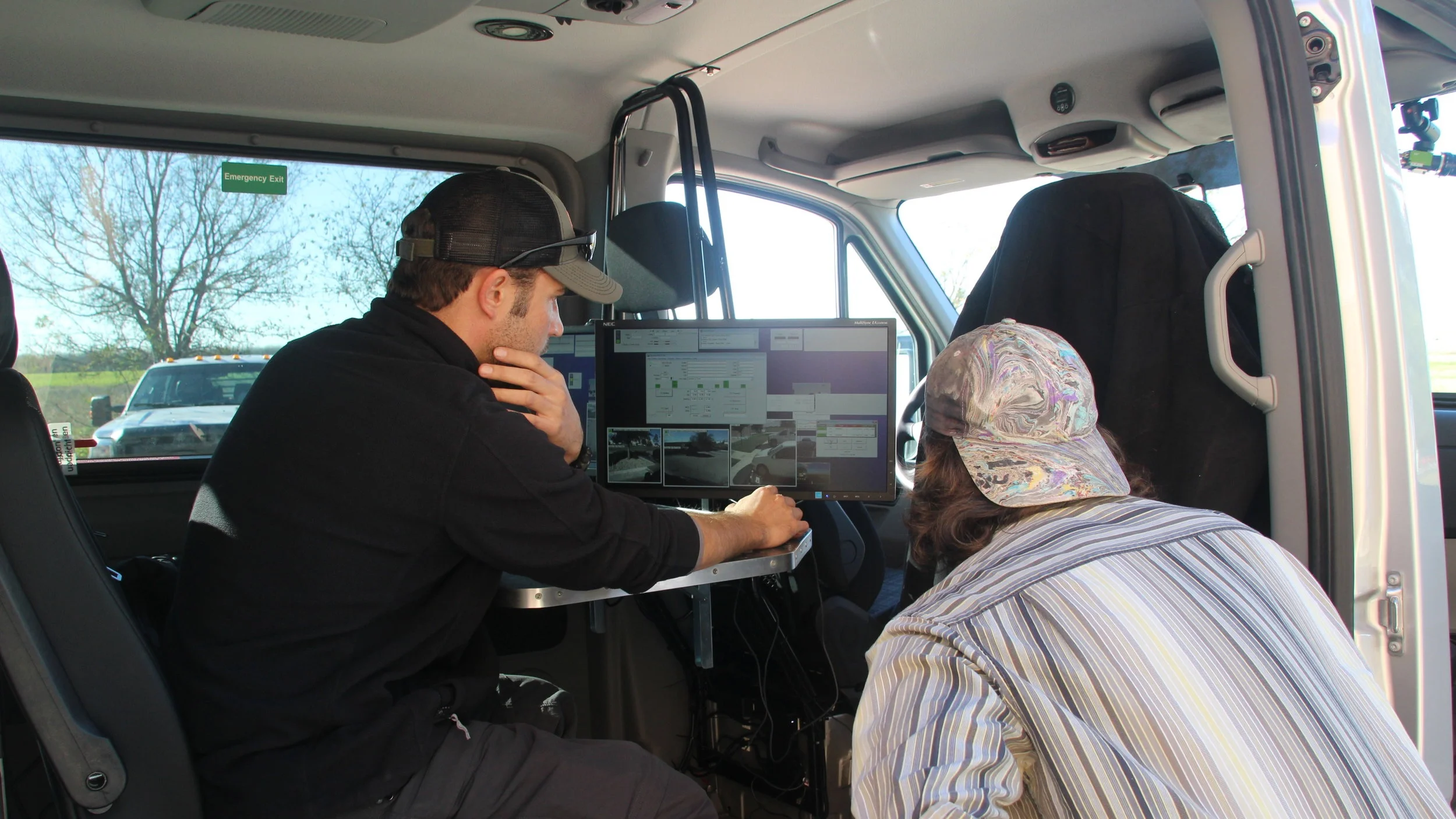
Automated condition data collection using APTech’s enhanced data gathering equipment (EDGE) van
Selecting pavement management software and assisting with its configuration and implementation
Reviewing agency treatment approaches and recommending possible improvements using preservation and maintenance
Providing additional engineering support services
Three of the agencies did not have PMS systems in place at the outset. These agencies are eager to determine and report needs using data-driven, performance-based decision processes. Two of the agencies were dissatisfied with the systems they were using, so our work greatly improved their capabilities. Given the success of this effort, the TPO has received approval for expanding this effort in fiscal years 2023 to 2026 to include re-collection of condition data and adding agencies who would like to participate.

Since 2005, APTech has been on a short list of on-call consultants providing management services to the Port Authority of New York and New Jersey (PANYNJ). Over that time, APTech has updated the pavement management systems at:
John F. Kennedy International Airport (JFK) in 2012, 2014, and 2016
Newark Liberty International Airport (EWR) in 2007, 2010, and 2014
LaGuardia Airport (LGA) in 2007, 2010, 2019, 2021, and 2022
Stewart International Airport (SWF) in 2013, 2019, 2021, and 2022
Teterboro Airport (TEB) in 2005, 2006, and 2010
The updates at JFK, EWR, SWF, and LGA included both the airside and landside pavement systems, while only the airside pavements were inspected at TEB. APTech has also performed similar services for other PANYNJ facilities, such as the Lincoln Tunnel, the Holland Tunnel, and the George Washington Bridge pavement complexes, along with pavement management system (PMS) updates in 2020 and 2021 for Bayonne and Goethals Bridge, and Outerbridge Crossing. In 2021, APTech updated the pavement management systems for Port Jersey and Port Newark-Elizabeth Marine Terminals.
For each project, APTech conducted a records review and used automated data collection equipment to collect pavement surface condition, transverse and longitudinal profile, rutting data, and right-of-way imaging. We performed shoulder and erosion pavement evaluations, as well as skid testing on select airside and landside pavements. In addition, APTech updated PANYNJ’s PAVER database with inventory changes, recent construction details, and pavement condition data to develop pavement condition index ratings for each pavement section.
Detailed distress maps were generated using data collected from EDGE, APTech’s automated data collection vehicle on select pavements at JFK and Lincoln Tunnel. APTech also developed pavement performance models to predict the PCI of each pavement section over the next 7 years and to determine when each pavement section drops below Authority-established trigger values. Maintenance and rehabilitation plans were developed to highlight the pavement rehabilitation needs and project activities, results, and recommendations were summarized into a project report. Finally, APTech provided training to PANYNJ staff on pavement management concepts, pavement distress types and causes, and use of PAVER software.
PANYNJ uses the information from the pavement management projects to manage its vast pavement system at all of its facilities, including airports, marine terminals, tunnels, and bridges. The use of the EDGE automated data collection vehicle to generate distress maps amidst JFK’s busy aircraft operations demonstrates the technology’s value. Additionally, this project involved coordinating with a subconsultant to provide lighting services for nighttime inspections of the shoulders. APTech completed this large-hub airport PMS project without impacting its busy aircraft operations. APTech is currently continuing services under an additional IDIQ agreement.

In 1999, the Arizona Department of Transportation (ADOT) Aeronautics Group recognized that it needed a system that would enable it to expend its limited budget for pavement maintenance and rehabilitation (M&R) in a way that maximized every dollar spent. To meet this challenge, ADOT chose APTech to establish an airport pavement management system (APMS). Impressed with APTech’s work and the usefulness of the APMS not only for themselves but also to the Federal Aviation Administration, airport sponsors, and consultants, the ADOT Aeronautics Group has retained APTech to complete six updates to the system, with the most current being completed in 2023.
During the most recent project, APTech updated the pavement systems inventory and associated maps and conducted Pavement Condition Index (PCI) inspections for sixty-two airports. In addition, APTech developed an 8-year M&R plan that focused on identifying projects for its proactive Airport Pavement Preservation Program (APPP).
Deliverables included a statewide report, individual airport reports, an APMS procedures manual, an executive summary report, and an update to its web-based pavement data visualization tool, IDEA. Many new features were incorporated into this version of IDEA, including a powerful query and filter tool and aerial imagery.
Training courses on the PCI procedure and the PAVER pavement management software were conducted as part of this update. The project culminated with a presentation of the findings of the most recent update and a demonstration on the use of IDEA at the Arizona Airports Association annual spring conference in May 2023.
During previous updates, structural testing with a heavy-weight falling-weight deflectometer, supplemented with a coring program, was undertaken as well as a structural analysis to determine structural strength and Pavement Classification Numbers.
APTech’s APMS inspections have made a lasting impact on the state. The initial 2000 implementation confirmed that state funding levels were insufficient to sponsor all needed pavement M&R projects. Therefore, the ADOT Aeronautics Group initiated the APPP, which allows the state to make the best use of its limited budget by funding those work types that have historically proven to provide the most benefit per dollar expended. The APPP is particularly important for smaller airports or those located in sparsely populated areas, which could not otherwise afford extensive maintenance efforts.
The ADOT Aeronautics Group is now able to proactively manage the pavement infrastructure at airports around the state with software that can help to identify pavement-related needs and develop prioritized lists of pavement-related projects.

In 2019, APTech was awarded a contract to administer the Nevada Local Technical Assistance Program (NVLTAP). The objective of the NVLTAP is to advance local agency transportation programs and practices on a fixed, 4-year budget of $300K through training, technical assistance, technology transfer, and workforce development services.
As the program’s administrator, APTech’s responsibilities include assessing needs, identifying equitable and accessible solutions, providing technical assistance services, monitoring program progress, reporting to the NVLTAP Advisory Board, and maintaining relationships with NVLTAP stakeholders. Technical assistance services have included creating a pavement management spreadsheet tool, safety grant application support, PASER condition survey demonstrations, pavement inventory development, and local road safety plan consulting.
APTech provides NVLTAP in-person and virtual technical training to develop an effective, efficient, and innovating workforce. Training topics include pavements, bridges, workplace and traffic safety, environment, civil rights, and foundational skills. APTech schedules forty-four instructor-led courses in the NVLTAP catalog and regularly creates new courses in response to local agency needs. To manage this large course catalogue, APTech created a learning management system for participants to register for courses, complete additional self-paced courses, and track their course completion and progress towards a Road Scholar Program completion.
APTech worked with the Nevada LTAP Advisory Board to plan, promote and hold the first Nevada Asphalt Conference on February 15-16, 2023. The conference exceeded expectations and connected 183 attendees with thirteen exhibitors and expertise from across the region.

In 2019, APTech assisted the Alaska Department of Transportation and Public Facilities (DOT&PF) in developing the agency’s fully compliant, risk-based transportation asset management plan (TAMP). Following up on this project, APTech was again chosen to update the agency’s TAMP in 2022. The plan documents DOT&PF’s practices and planned investments for managing the agency’s pavement and bridges on the National Highway System (NHS) from 2022 through 2031.
APTech led all aspects of the TAMP development, including updating the documentation of asset management processes, financial planning, and life cycle planning. Since implementing the previous TAMP, DOT&PF has embraced the spirit of the legislation by updating its asset management practices and implementing new pavement and bridge management systems that use the National Highway Performance Program metrics to inform investment decisions. APTech assisted the DOT&PF by using these new systems to update its TAMP, including significant support to refine the agency’s life-cycle planning analyses for bridges.
The Bipartisan Infrastructure Law (BIL), passed in November 2021, requires agencies to consider extreme weather and resilience in its life-cycle planning and risk analyses. Alaska’s extreme environment requires considerable focus on resilience in all aspects of asset management and engineering. The revised TAMP highlights the agency’s efforts to understand the conditions to which pavements and bridges will be exposed to construct infrastructure assets that can withstand Alaska’s harsh environment.