

We use the latest tools and resources to give our clients the best, most reliable results.

Is your pavement deteriorating because of a design flaw? A construction error? How extensive is the damage to the pavement really? How do you get the most out of your budget to improve the performance of your pavement network for as long as possible? You call APTech.
Our pavement evaluation and testing services define your pavement’s performance, identify causes of deterioration, georeference distress, and identify defects of design and construction. We employ the best analysis tools and methodologies to:
Determine the best repair or rehabilitation option for your pavement
Recommend strategies that enhance long-term performance
Develop a suite of design alternatives that include various levels of rehabilitation, reconstruction (with or without recycling), and new designs
Design hot-mix asphalt and portland cement concrete pavements
Provide expert witness testimony
Ready to get started on your next pavement evaluation or design project? Let’s get in touch.
APTech’s EDGE: Our Data Collection Powerhouse

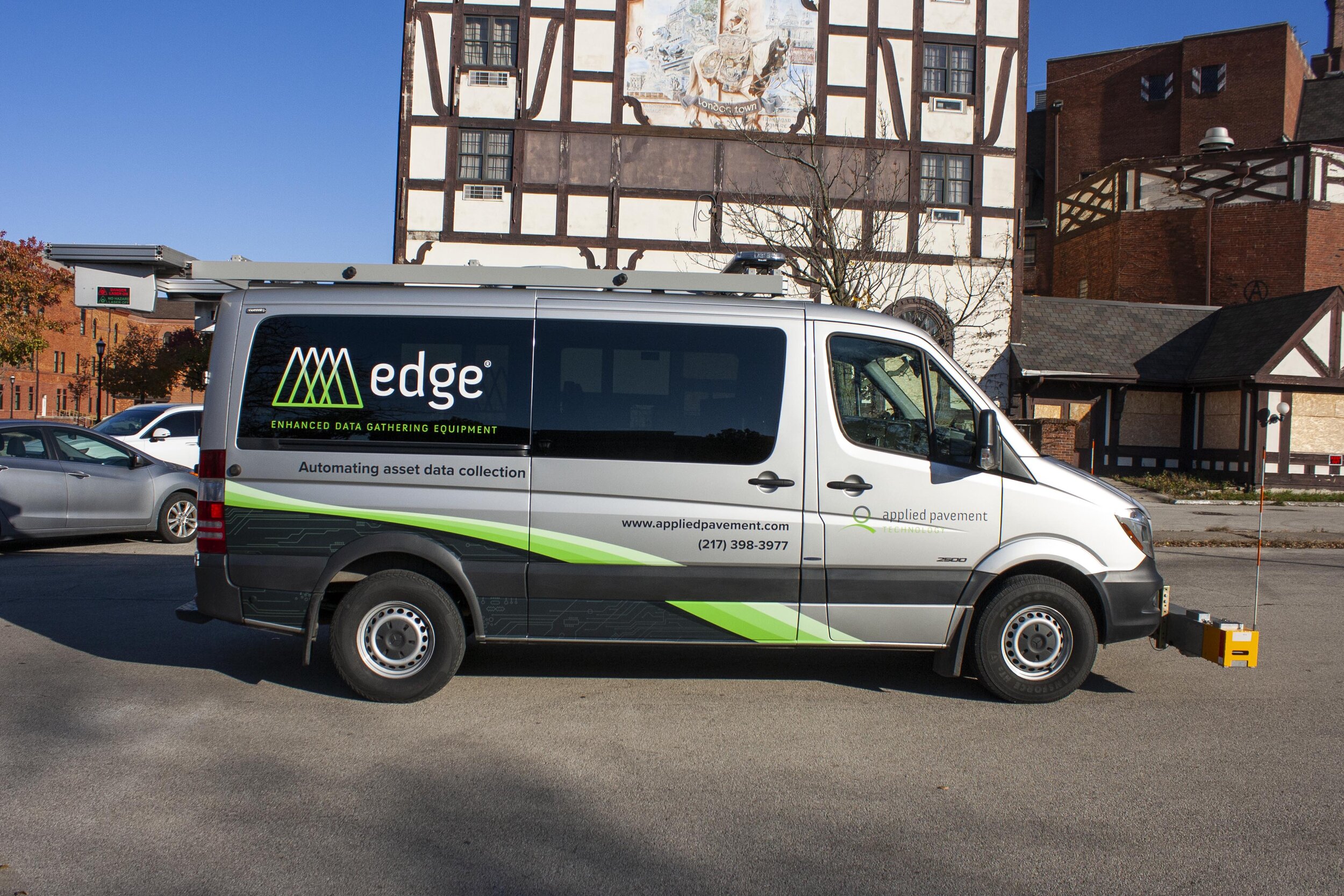

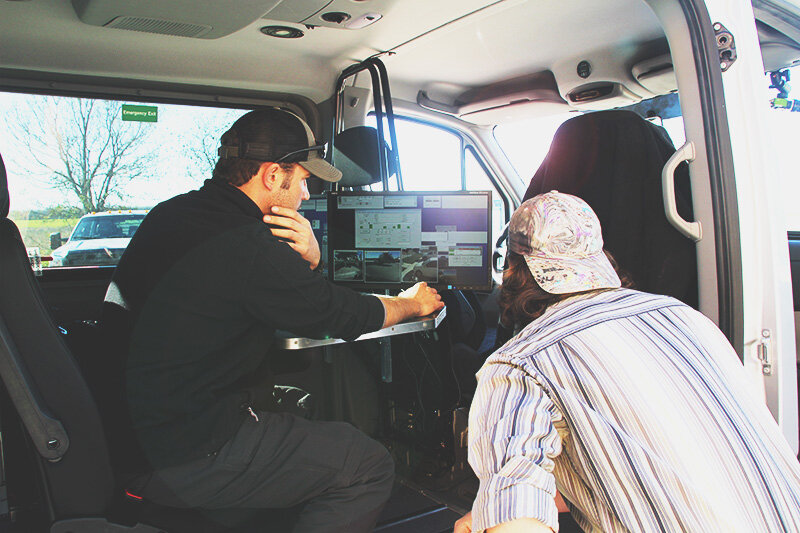
EDGE (Enhanced Data Gathering Equipment) creates a comprehensive asset inventory with quality condition data quickly, safely, and efficiently. Using the latest technology, EDGE gathers data at typical traffic speeds, meaning minimal impact to the driving public and without exposing surveyors to traffic.
In one pass, EDGE collects multiple types of performance data and delivers thorough, reliable results with high digital quality.
FWD Testing: A Nondestructive, In-Depth Look
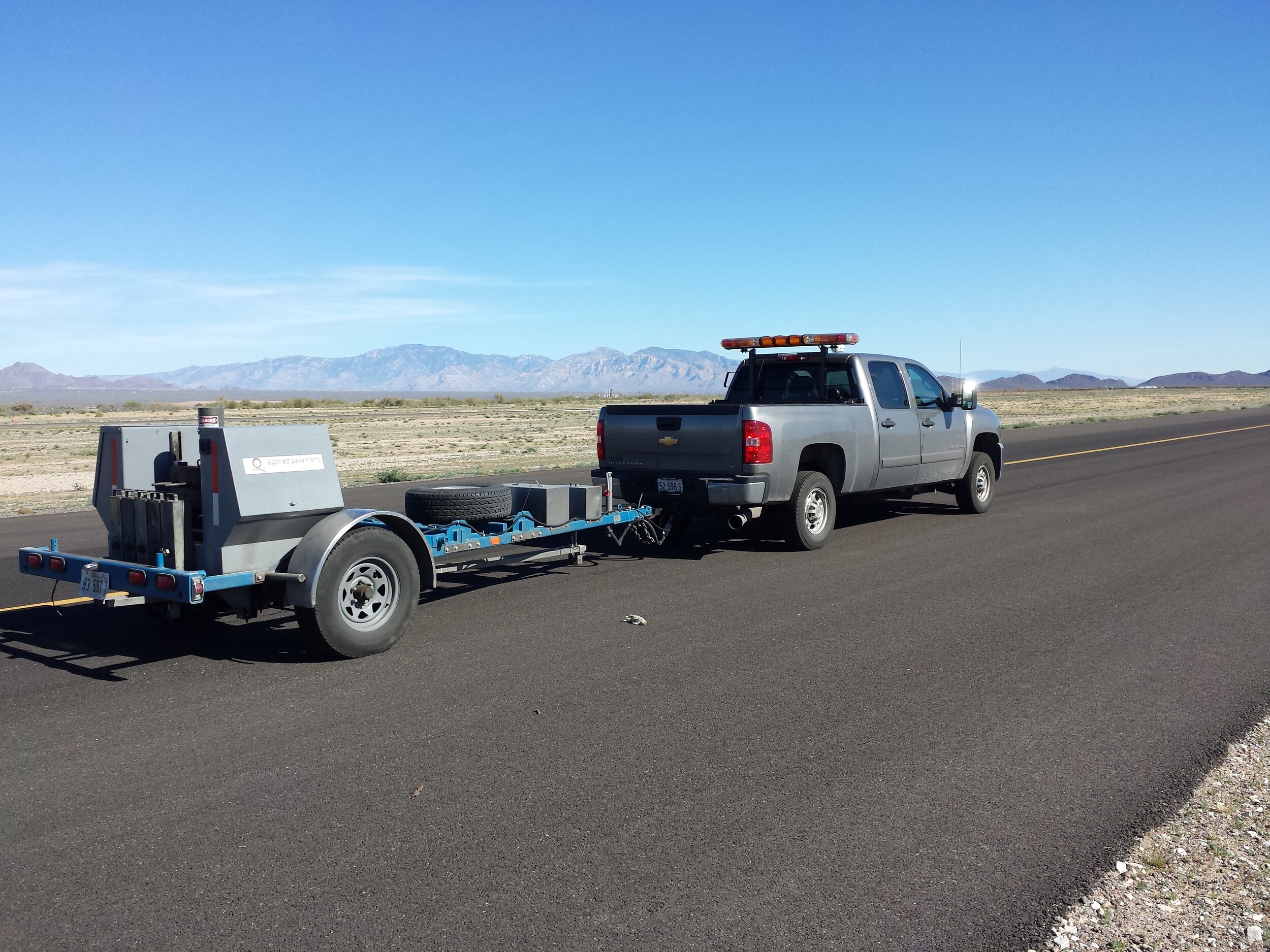
We often use our heavy-weight Falling Weight Deflectometer (FWD) for pavement structural evaluation. These analyses identify areas of non-uniform load response, back-calculate material properties, determine overlay thickness requirements, and provide an important input for the determination of Pavement Classification Numbers (PCNs).
Our engineers are highly experienced with FWD testing and analysis, with over 70 airfield and roadway projects under our belt to date.
Recent Pavement Evaluation and Design Projects
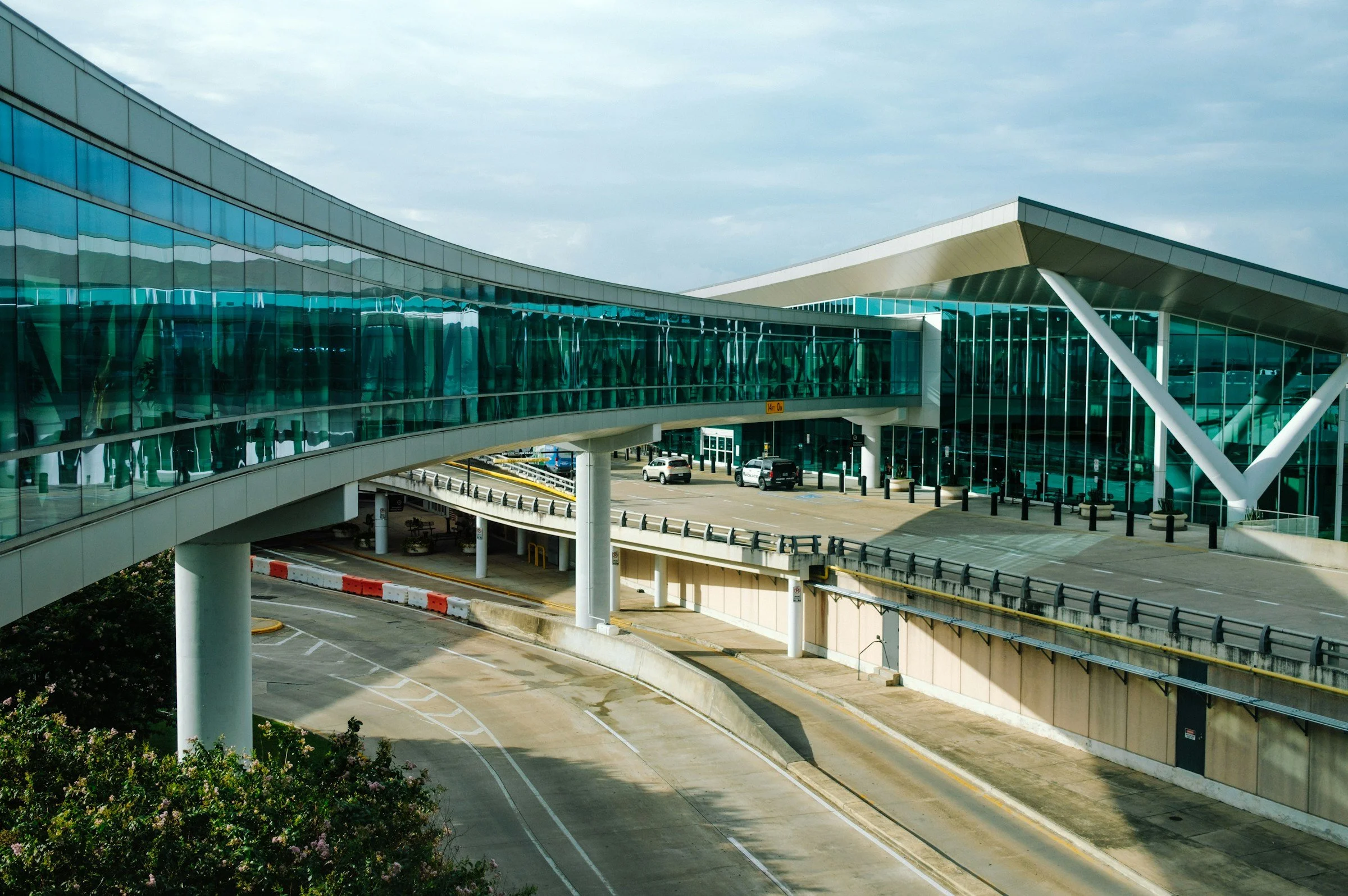
The Houston Airport System (HAS) selected APTech, working as a subcontractor, to complete several comprehensive pavement condition assessments as part of its asset management strategy to maintain its pavement infrastructure. APTech was chosen for this work due to our experience performing the airport pavement management system (APMS) update in 2014. This project involved concurrent efforts at three airports maintained by HAS (Houston George Bush Intercontinental Airport, Houston William P. Hobby Airport, and Ellington Field) and required APTech to manage large volumes of accurate data and integrate them into the HAS PAVER databases.
This project entailed leading APMS updates at all three HAS airports. To begin, APTech performed a records review while updating the pavement inventory and network definition. APTech then collected pavement condition data by georeferencing each distress on runways, taxiways, and select aprons using tablet computers paired with GPS units. APTech staff filtered the collected distress data according to the ASTM D5340-20 PCI methodology prior to uploading into the PAVER database for each airport. APTech also performed FWD testing and analysis to assess structural integrity of the pavements and provided a runway grooving assessment. As part of this work, APTech also developed a capital improvement plan (CIP) and an infrastructure condition assessment using metrics established by HAS. APTech concluded this project by developing a final project report and providing HAS employees with PAVER training.
Because of APTech’s work, the HAS staff can now make asset management decisions across their pavement networks using geo-referenced data down to an individual slab-level. The collected information allowed HAS to easily retrieve the physical condition, remaining service life, and operational impact of each pavement asset throughout their airfield networks. Additionally, by geo-referencing each distress the maintenance work plans are based on actual locations and dimensions of work quantities. Due to HAS’ satisfaction with this project, APTech was recently awarded another contract as a subconsultant to incorporate the remaining aprons and shoulder pavements into their pavement management system.

In advance of the 2028 Olympics, Los Angeles World Airports (LAWA) is planning improvements for the North Airfield to enhance its airfield operational management and safety as part of the Los Angeles International Airport (LAX) Airfield Improvement Program (AIP). These affected areas include the exits and runway keel section of Runway 6L-24R and Runway 6R-24L. As part of the selected design team, Applied Pavement Technology, Inc. (APTech), as a subcontractor to HNTB Corporation (HNTB), provided pavement design services to develop multiple rehabilitation and new construction alternatives for the taxiways, along with shoulder and blast pad pavements and erosion control areas. APTech also performed structural testing to assess the structural remaining life of the Runway 6L-24R pavements.
APTech reviewed available geotechnical testing results and aircraft traffic data for the anticipated project locations and developed pavement design alternatives in accordance with FAA Advisory Circular 150/5320-6G, Airport Pavement Design and Evaluation, and using FAA’s FAARFIELD pavement design software. Geotechnical testing indicated a wide range of subgrade support conditions across the project area. Additionally, traffic demands varied by taxiway, with the high-speed exits having arrival aircraft (lighter weights). The design team worked with LAWA to determine appropriate aircraft traffic mixes and anticipated growth rates for the associated runways and taxiways. Both 20-year and 40-year designs were assessed. Based on the varying field conditions and anticipated traffic, a matrix of pavement cross sections was determined, with advantages and disadvantages provided for each alternative. APTech also conducted falling weight deflectometer (FWD) testing on Runway 6L-24R and analyzed the data to determine in place layer properties and to assess the structural remaining life using the FAA’s FAARFIELD software.
As part of this project, APTech offered customized solutions to fit LAWA’s needs. Pavement designs were selected to be cost-effective and meet traffic demands. APTech recommended concrete for the departure pavements (Runway 6R-24L and Taxiway E) and high-speed exit taxiways pavements (Taxiways W, V, U, and S), with the high-speed taxiway pavements being slightly thinner overall. Asphalt pavements were selected as more cost-effective alternatives in the non-traffic areas such as the shoulder, blast pad, and erosion control areas.
Based on the structural assessment of Runway 6L-24R, APTech determined that at least portions of the asphalt overlay would likely need to be replaced within about 5 years. The design team noted that unbonded areas determined through the evaluation are anticipated to show fatigue cracking from acting as thin layers under aircraft traffic loads, and APTech recommended they be removed and replaced. These improvements will enhance the safety of passengers and airport employees and ensure the airport will be able to handle the additional traffic anticipated for the Olympics.

Applied Pavement Technology, Inc. (APTech) worked as a subcontractor to update the PMP for the runways and taxiways at Charlotte Douglas International Airport (CLT). This project included approximately 20 million square feet of pavement and was built on a program previously completed in 2017 for CLT’s runway and taxiway pavements. Runway and taxiway shoulder pavements were incorporated into the PMP as part of this project, providing the client with more comprehensive information about their airfield pavements. The project was complemented by a Pavement Management Program (PMP) for apron pavements, completed by APTech in 2020.
This project consisted of multiple phases. The first phase focused on pavement analysis, which included reviewing relevant pavement maintenance and construction records, performing PCI inspections, conducting FWD testing, and developing a coring plan. On-site work was completed during nightly closures. APTech customized the PAVER database to determine the maintenance and rehabilitation (M&R) needs, which were used as a starting point for developing a 5-year capital improvement plan (CIP). Subsequent analysis consisted of calculating PCNs and PCRs, along with calculating structural remaining life of each aircraft-trafficked pavement section. APTech submitted a comprehensive project report and executive summary documenting the methodologies used, data collected, and results of the analysis for the runway and taxiway PMP update. APTech also participated in a series of meetings throughout the project to facilitate coordination and communication of results.
The second phase of this project included on-call pavement assessments as requested by CLT to determine the ability of certain pavement areas to accommodate aircraft operations outside of the typical aircraft fleet mix. The final phase consisted of performing annual (4 years in total) non-destructive testing on a sinusoidal longitudinal joint constructed along Taxiway M, analyzing the data to calculate the load transfer efficiency, assessing the relationship to or change from previous results, and providing the data to the Federal Aviation Administration’s William J. Hughes Technical Center as part of ongoing research.
APTech’s work on the PMP allowed CLT staff to manage their valuable runway and taxiway pavement infrastructure in an efficient, cost-effective manner, considering both functional and structural conditions. Results of this project brought engineering, planning, and maintenance staff together to continue improving their airfield pavement infrastructure.

APTech has provided pavement management, evaluation, and design services to the Kansas City Aviation Department (KCAD) for projects at Kansas City International Airport for more than 15 years. During our most contract, ongoing since 2020 as a subconsultant, APTech performed the 2021 and 2024 PMP updates, as well as airfield pavement evaluation and design projects for Runways 9-27 and 1L-19R and for Taxiways C and E. These services include PCI inspections, PAVER updates and analysis, FWD testing and analysis, PCN and PCR calculations.
PMP Update
In 2021, the KCAD partnered with the HNTB-APTech team to update to the airfield PMP. The project included over 23 million square feet of airfield pavement on runways, taxiways, and terminal apron pavements. The project also incorporated the overhaul base apron. APTech began this project by reviewing the construction records and updating the PAVER database and associated maps to reflect construction and rehabilitation work that had occurred since the previous update. APTech also led the pavement condition index (PCI) inspections (assisted by HNTB staff), identified maintenance and rehabilitation needs, developed a recommended capital improvement plan (CIP), and documented the results and recommendations in a project report and corresponding executive summary. The HNTB-APTech team are currently conducting the 2024 PMP Update. In addition to the tasks completed during the 2021 Update, the APTech team is also determining Pavement Condition Ratings (PCR) for runway pavements to comply with the FAA requirements.
Evaluation and Design Services
Based on needs identified in the PMP project, in 2022, APTech performed an evaluation and preliminary design for Runway 9-27. APTech began this project by performing falling-weight deflectometer (FWD) testing to conduct a structural analysis of the asphalt-surfaced pavement on the runway. APTech then developed a geotechnical testing plan based on initial review of the FWD data. APTech also assessed the PCN and PCR for this runway based on testing results and current traffic. The results of this analysis were used to develop a short- and long-term rehabilitation plan for this runway.
Also in 2022, APTech performed a structural analysis of the aging concrete pavement along Taxiway E, which was exhibiting durability cracking. APTech conducted FWD testing and provided an associated analysis while offering input into a geotechnical investigation. The results of this work led to pavement surface reconstruction recommendations.
In 2020, APTech performed pavement design services for the planned reconstruction of Runway 1L-19R, which serves as the airport’s primary runway. APTech began this project by reviewing available records, including data from a previously conducted preliminary evaluation. The APTech team then developed runway reconstruction design alternatives, performed a life-cycle cost analysis (LCCA), and created a detailed pavement design report. Following reconstruction of the runway, APTech also reviewed PCR calculations completed by HNTB.
In 2020, APTech also conducted an in-depth evaluation of Taxiway C (east of Runway 1R-19L) to develop a rehabilitation plan. This project involved reviewing design and construction plans, past pavement studies, and traffic details. APTech also performed FWD testing as part of the evaluation and developed pavement rehabilitation and reconstruction alternatives. The APTech team also created an LCCA of feasible alternatives to allow KCAD to determine the most cost-effective work approach. Following construction of a pavement overlay along a portion of Taxiway C, a B747 aircraft was improperly tugged across the pavement causing surface damage. To assess the extent of the surface damage, APTech partnered with TREKK, who took UAS-captured aerial images to better assess repair costs.
APTech’s work at KCI demonstrates our team’s ability to customize multiple projects to fit the unique needs of individual airports. This project also illustrates APTech’s experience with pavement management and evaluation projects within the FAA’s Central Region.

North Dakota’s aviation system was heavily impacted by investments in oil recovery starting in 2008. In some areas of the state, traffic levels increased by more than 70 percent annually, and most airports saw much larger and heavier aircraft in their operations. Together, these factors impacted the system’s condition and future needs and presented a serious challenge for state officials to manage their airport pavement infrastructure. To proactively address this need, in 2011, North Dakota Aeronautics Commission (NDAC) selected APTech, as a subconsultant, to update and enhance North Dakota's state airport pavement management system (APMS). NDAC reselected APTech in 2015, 2018, 2021, and most recently in 2023 to continue to update and improve their APMS.
APTech’s role in these projects included updating pavement inventory data, construction history information, and project mapping. APTech also collected pavement condition index (PCI) inspection data, completed a variety of condition analyses, and developed a five-year pavement needs analysis. During previous updates, APTech also performed non-destructive testing using our falling weight deflectometer (FWD) and calculated Pavement Classification Numbers (PCNs).
In 2022, the Federal Aviation Administration (FAA) updated pavement strength reporting guidance to align with those of the International Civil Aviation Organization (ICAO), causing reporting requirements to transition from the previous PCNs to Pavement Classification Ratings (PCRs). As part of the most recent update, APTech is calculating PCRs for runways servicing aircraft over 12,500 lbs at eight commercial service airports to comply with the updated pavement strength reporting guidelines.
As part of these updates, APTech has assisted in outreach activities related to the APMS in the form of focus group meetings and presentations at North Dakota’s annual airport conference. APTech also developed—and subsequently updated—its web-based interactive pavement management tool, IDEA, to enable the NDAC, airport managers, and other stakeholders to view project results online and modernize the way project information and results were disseminated.

In 1998, the Pennsylvania Bureau of Aviation (Bureau) selected APTech to implement a statewide airport pavement management system (APMS). Due to the agency’s satisfaction, APTech was retained again in 2005, 2008, 2015, and 2022 to update, expand, and improve the APMS.
The most recent project involved evaluating the pavements at 85 public-use airports and heliports in Pennsylvania using the Pavement Condition Index (PCI) procedure. APTech used that information to develop maintenance and rehabilitation (M&R) recommendations for each airport, analyzing the impact multiple budget scenarios have on the system’s condition. Additionally, APTech prepared project reports and updated the Bureau’s web-based pavement data visualization tool, IDEA. Finally, structural testing with a heavyweight falling weight deflectometer (FWD), supplemented with a coring program, was performed. The APTech team analyzed the collected information to determine Pavement Classification Ratings (PCRs) for the primary runways at select commercial airports.
One unique challenge of this project was the absence of historical pavement layer thickness records for some runway pavement included for PCR determinations. Additionally, a review of FWD deflection testing data identified further layer thickness needs. To address these issues, APTech reached out to each of the airport sponsors directly where additional information was needed. This effort greatly reduced the need for additional investigation and allowed APTech to implement a plan to obtain further information through pavement coring. These efforts were successful in obtaining the data needed to determine the PCRs for all included runway pavements.
The updated APMS gives the airports, the Bureau, and the Federal Aviation Administration (FAA) the pavement information and analytical tools necessary to identify pavement-related needs, optimize the selection of projects and treatments, and evaluate the long-term impacts of their project priorities. The APMS will also be used to determine the ability of the current aviation system to meet transportation and economic objectives as they relate to the pavement infrastructure on a statewide basis.

To protect the valuable infrastructure of the Commonwealth’s airports, the Massachusetts Department of Transportation (MassDOT), Aeronautics Division selected APTech to implement an airport pavement management system (APMS) for thirty-three airports in 2012. Based on their satisfaction with our work, APTech was selected to perform the 2016 and 2020 to 2023 updates.
During the latest update, APTech compiled work history information and used that to update network definition maps. To obtain current condition information, APTech performed Pavement Condition Index (PCI) inspections according to Federal Aviation Administration (FAA) and ASTM procedures. This work then led to the update of the PAVER database.
With information in hand, APTech was then able to develop a multi-year maintenance and rehabilitation (M&R) plan for MassDOT and generate individual reports, a statewide report, and an executive summary. APTech also used the findings of the study to update MassDOT’s web-based, pavement data visualization tool, IDEA. This tool enables users to easily view and retrieve project information and results.
As part of the project, APTech also provided MassDOT staff with training on the PCI procedure and how to use PAVER. During previous work on the APMS, APTech calculated Pavement Classification Numbers (PCNs) for selected pavements as well as conducted training on the PCI procedure to airport and MassDOT staff.
APTech’s update of the APMS enables MassDOT to continue to preserve its valuable airport pavement infrastructure in an efficient and effective manner. It is also able to continue its outreach program to communicate the importance of pavement preservation to the airport sponsors and consultants. The IDEA provides an effective tool to further this communication and provides easy access to the findings and recommendations developed during the APMS project, without requiring the use of pavement management software.

Knoxville-Knox County Regional Transportation Planning Organization (TPO) was in search of an experienced firm to provide it with the necessary tools to support implementation of pavement management for its member agencies. APTech was chosen to provide these services in two phases.
Phase 1 was completed over the course of 2020 and 2021 and involved the development of pavement management implementation plans for participating agencies (Maryville, Clinton, Oak Ridge, Knoxville, and Blount County). This was accomplished by informing agencies about the benefits of pavement management, developing and leading workshops, hosting follow-up discussions, and developing a Phase 2 implementation plan.
The Phase 2 plans started in 2022 and consisted of implementing pavement management systems (PMS) for participating agencies. These tasks include:
Automated condition data collection using APTech’s enhanced data gathering equipment (EDGE) van
Selecting pavement management software and assisting with its configuration and implementation
Reviewing agency treatment approaches and recommending possible improvements using preservation and maintenance
Providing additional engineering support services
Three of the agencies did not have PMS systems in place at the outset. These agencies are eager to determine and report needs using data-driven, performance-based decision processes. Two of the agencies were dissatisfied with the systems they were using, so our work greatly improved their capabilities. Given the success of this effort, the TPO has received approval for expanding this effort in fiscal years 2023 to 2026 to include re-collection of condition data and adding agencies who would like to participate.

Since 2005, APTech has been on a short list of on-call consultants providing management services to the Port Authority of New York and New Jersey (PANYNJ). Over that time, APTech has updated the pavement management systems at:
John F. Kennedy International Airport (JFK) in 2012, 2014, and 2016
Newark Liberty International Airport (EWR) in 2007, 2010, and 2014
LaGuardia Airport (LGA) in 2007, 2010, 2019, 2021, and 2022
Stewart International Airport (SWF) in 2013, 2019, 2021, and 2022
Teterboro Airport (TEB) in 2005, 2006, and 2010
The updates at JFK, EWR, SWF, and LGA included both the airside and landside pavement systems, while only the airside pavements were inspected at TEB. APTech has also performed similar services for other PANYNJ facilities, such as the Lincoln Tunnel, the Holland Tunnel, and the George Washington Bridge pavement complexes, along with pavement management system (PMS) updates in 2020 and 2021 for Bayonne and Goethals Bridge, and Outerbridge Crossing. In 2021, APTech updated the pavement management systems for Port Jersey and Port Newark-Elizabeth Marine Terminals.
For each project, APTech conducted a records review and used automated data collection equipment to collect pavement surface condition, transverse and longitudinal profile, rutting data, and right-of-way imaging. We performed shoulder and erosion pavement evaluations, as well as skid testing on select airside and landside pavements. In addition, APTech updated PANYNJ’s PAVER database with inventory changes, recent construction details, and pavement condition data to develop pavement condition index ratings for each pavement section.
Detailed distress maps were generated using data collected from EDGE, APTech’s automated data collection vehicle on select pavements at JFK and Lincoln Tunnel. APTech also developed pavement performance models to predict the PCI of each pavement section over the next 7 years and to determine when each pavement section drops below Authority-established trigger values. Maintenance and rehabilitation plans were developed to highlight the pavement rehabilitation needs and project activities, results, and recommendations were summarized into a project report. Finally, APTech provided training to PANYNJ staff on pavement management concepts, pavement distress types and causes, and use of PAVER software.
PANYNJ uses the information from the pavement management projects to manage its vast pavement system at all of its facilities, including airports, marine terminals, tunnels, and bridges. The use of the EDGE automated data collection vehicle to generate distress maps amidst JFK’s busy aircraft operations demonstrates the technology’s value. Additionally, this project involved coordinating with a subconsultant to provide lighting services for nighttime inspections of the shoulders. APTech completed this large-hub airport PMS project without impacting its busy aircraft operations. APTech is currently continuing services under an additional IDIQ agreement.

In 2021, APTech was awarded a 5-year contract with the Colorado Department of Transportation (CDOT) Division of Aeronautics to provide updates to Colorado’s statewide Airport Pavement Management System (APMS), continuing a relationship with the Division that extends back to 1996.
This update will allow stakeholders, including the CDOT Division of Aeronautics, the Federal Aviation Administration (FAA), and individual airports, to make informed decisions on where and how to direct funds for the State’s airport pavement assets. To achieve this goal, APTech is evaluating the current pavement conditions by performing Pavement Condition Index (PCI) inspections. The data collected from these evaluations are then utilized to update the state’s PAVER database and develop pavement performance models.
The data are also used to generate recommendations for pavement maintenance and rehabilitation (M&R), which CDOT uses along with future pavement performance predictions to prepare and evaluate capital improvement plans for each airport. The collected data and analysis results of each year’s APMS update are easily accessible through the web-based interactive pavement management tool, IDEA.
A key to the success of this long-term relationship is the partnership between APTech and the CDOT Division of Aeronautics. A team consisting of an APTech engineer and CDOT Division of Aeronautics staff members perform PCI evaluations at one-third of the sixty-two airports each year. The CDOT Division of Aeronautics facilitates the process by obtaining information pertaining to pavement maintenance, rehabilitation, and construction at the project airports and assisting with the development of unit costs for use in the M&R analysis.
Through this partnership, APTech provides CDOT first-hand knowledge of airport pavement conditions, and in turn, APTech receives accurate construction records and costs to update the APMS’s PAVER database and IDEA.

The City of Champaign, IL sought professional engineering services related to pavement management for multiple inspection cycles, starting in 2021 and running through 2028. APTech is supporting the City with several pavement management services, including:
Updating pavement condition data collection for local, collector, and arterial streets
Updating the PAVER database
Providing updates to APTech’s web-based pavement management tool, IDEA
Providing the City with comprehensive reports
Conducting any special studies as defined by the City, such as:
Evaluation of brick streets
Evaluation of premature failures
Evaluation of selected roadways for consideration of suitable repair options
Through this work, APTech has supported pavement management needs for the City since 2014. Reports are generated on an as needed basis to respond to needs such as City Council presentations. APTech’s IDEA tool has provided the City with a web-based visualization tool for their pavement management data, making it much more accessible.

In 2019, the City of Miami decided to move toward a more data-driven, informed decision making process for their transportation asset needs. Rather than planning reactively, the City sought an enterprise-wide asset management system that would support cross-asset class decision making. APTech was part of a team that collaborated closely with the City to successfully deliver all aspects of this work, including collecting inventory and condition information for a wide range of transportation assets and implementing an asset management system that would allow the City to manage their assets effectively.
As part of this effort, APTech completed the automated data collection for about 700 centerline miles of City streets and assisted the City with development of pavement family definitions, along with the development of treatment protocols and performance models for each defined pavement family. APTech performed multiple budget scenario analyses using Scenario Builder and supported agency training for updates to treatment protocols and use of Scenario Builder to perform PMS analyses. In response to requests from the City, APTech also provided guidance on future updates and pavement management planning needs.
As a result of this work, the City of Miami is now able to estimate work needs and network conditions into the future, provide information to decision makers about the impact of budget adjustments, and improve their maintenance and preservation practices to make more effective use of limited resources.

The City of Bozeman, Montana, partnered with APTech, established two primary goals for this project. The first was to complete a pavement condition assessment for approximately 242 centerline miles of roadway and update the City’s PAVER database. The second was a detailed comparison between the 2013 assessment and this current work in an effort to assess the effectiveness of the City’s street maintenance program. The City also asked APTech to provide recommendations where appropriate for possible improvement moving forward.
APTech’s for this project work included:
Reviewing and updating the current PAVER database with new roadways and any work history done since the last update
The updated shape file was then used to prepare for condition data collection
Collecting data using the Enhanced Data Gathering Equipment (EDGE) automated data collection van
Conducting distress surveys, which identified cracking and other distresses on the images
Performing additional reviews by trained surveyors to validate the automated process and confirm the results aligned with ASTM D6433
The outcome was then tabulated by distress type, severity, and extent by road segment
Preparing the longitudinal profile, summarized as International Roughness Index, and rutting measurements
Loading the distress data and rutting into PAVER to calculate the pavement condition index (PCI)
Comparing the 2013 and current pavement conditions
This allowed APTech to comment on the effectiveness of the City’s street maintenance program
Proving treatment strategies and opportunities for improvement
The assessment provided the City with an updated PAVER pavement management system (PMS) database to use in work planning and budgeting, an objective review of maintenance program effectiveness, and recommendations for improved strategies that make more effective use of agency resources. These deliverables will help the City make accountable, data-driven, performance-based decisions about needs.
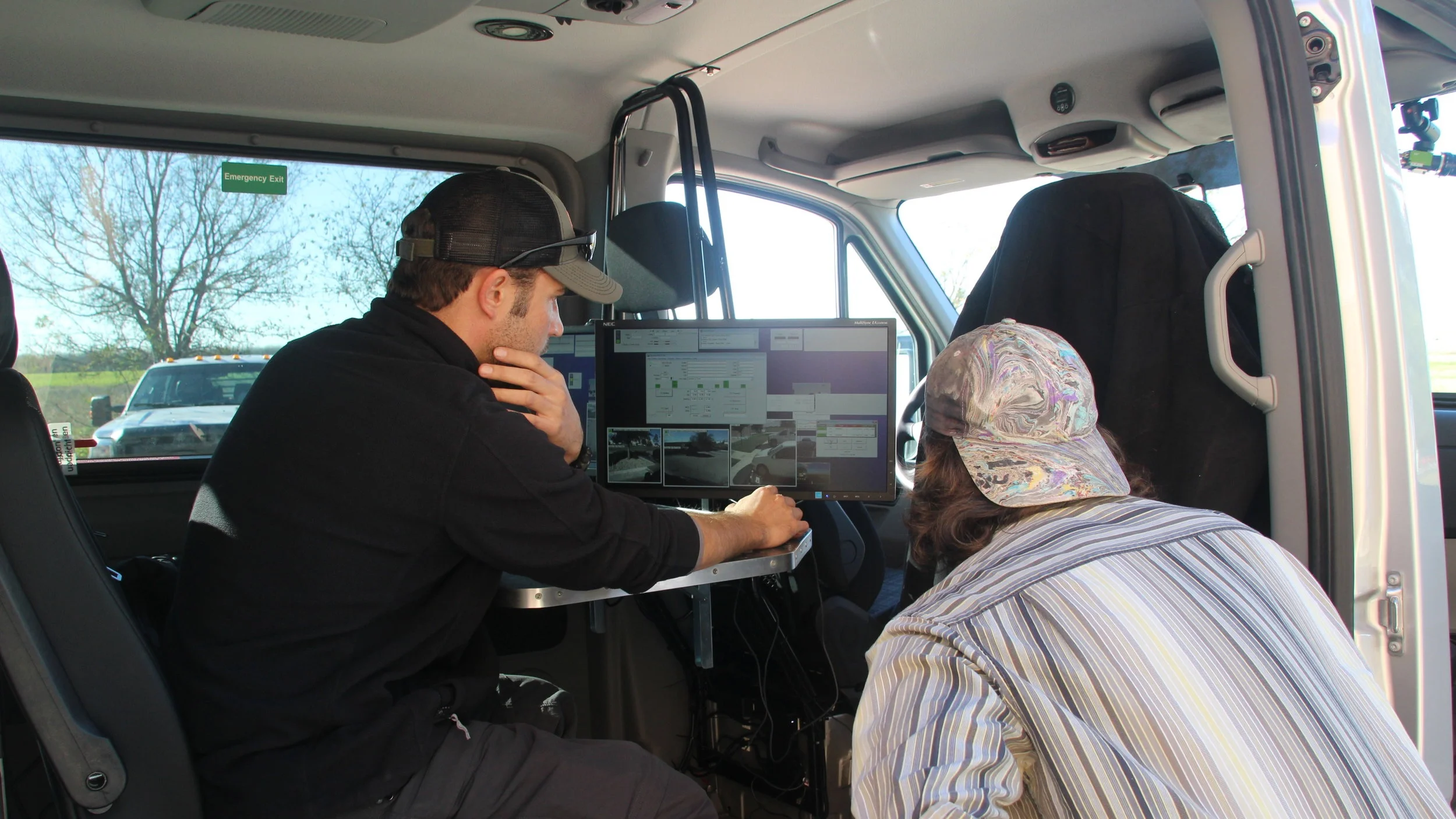
To better plan work needs, Bastrop, Texas required updated pavement condition information for its 60-mile street network, summarized as Pavement Condition Index (PCI) values based on ASTM Standard D6433. The city needed this information in a format that could be effectively communicated and could be displayed as part of its GIS database. APTech was selected to provide this service in 2018, then again in 2022.
As part of this work, APTech deployed its enhanced data gathering equipment (EDGE) van to gather detailed, spatially-referenced pavement condition data for all City-maintained streets. This included distress data, longitudinal and transverse profile, and multi-view Right-of-Way imagery. APTech used the distress data to determine road segment PCI values and then added the PCI and date of data collection as attributes in the City GIS database. In the 2022 work, APTech added additional date and condition attributes so the City could compare conditions between the two data collection rounds
As a result of our work, Bastrop was able to display current information for Council review. As a value-added benefit, APTech provided a map-based viewer that allows the City to see all of its collected data as it “drives” the network from the safety of their office computers. This project enhances the City’s ability to make decisions about needs, support those decisions with real data, be responsive to inquiries, and communicate specifics to stakeholders effectively and efficiently.

APTech was hired as a subcontractor to SHI International Corp. to assist with the implementation of Cartegraph OMS for Fort Bend County, Texas. Fort Bend County has almost 2,000 miles of roads that it manages. The County is eager to proactively manage its roadway assets and support budget projections with clear, accountable, map-based information. APTech is pleased to have supported this effort and worked with the County to improve its capabilities.
APTech collected automated condition data using its enhanced data gathering equipment (EDGE) van and processed this data to produce distress and profile summaries by road segment. This data was loaded into Cartegraph and reviewed by the County for accuracy. APTech then worked with the County to establish pavement families, treatment strategies, and performance models for configuration of the PMS. Next, APTech ran initial scenarios for the County and provided training to the County in configuration of the PMS and running scenarios so it can complete analyses on its own after project completion.

In 2020, following a qualifications-based selection, Jackson Municipal Airport Authority (Authority) entered into a contract with Applied Pavement Technology, Inc. (APTech) to implement an airport pavement management system (APMS) for Jackson-Medgar Wiley Evers International Airport (JAN) and Hawkins Field Airport (HKS). The project is nearing completion, with only the capital improvement plan (CIP) development and report delivery tasks remaining. The deliverables for this project will provide the Authority with a planning tool to utilize reaching both short- and long-term goals.
For both airports, APTech started the project by reviewing all relevant records and developing a network definition. From there, a network-level pavement condition index (PCI) inspection, along with a structural assessment to determine the pavement classification number (PCN), was conducted. APTech also conducted falling-weight deflectometer (FWD) testing and a geotechnical investigation, which are being used in the development of a multi-year CIP. A PAVER database for inventory, construction history, and PCI data was created and updated with the findings from this project. Finally, APTech implemented its interactive web-based pavement management tool, IDEA to allow for easy access to the data collected during the APMS updates.
The Authority places a high importance on preserving pavement infrastructure, and APTech’s pavement management services will allow for them to proactively manage their pavement assets and make the most efficient use of their funding dollars. The detailed implementation of an APMS will provide the Authority with a framework to prioritize their rehabilitation needs, as well as justification to obtain any future funding needs. The web-based IDEA will allow for easy access to the results and recommendations without the need to learn how to use complicated pavement management software.

For years, the Kane County Department of Transportation used Illinois’ Condition Rating System (CRS) and a proprietary pavement management system (PMS) to manage their roadway network. However, after experiencing difficulties updating the system, the County switched to a newer asset management tool, expanding on their existing relationship with Cartegraph (OMS). The County hired APTech to manage the effort and successfully implement OMS and provide training for the County.
Our work included:
Collecting condition data for the County’s 350 miles of roads using APTech’s EDGE van
Summarizing the collected data as PCI values
Configuring OMS with treatment strategies and performance models that were representative of County practice
Providing training to the County on the use of Scenario Builder to perform budget analyses and create work needs projections
Using historical condition data to assess treatment effectiveness and help the County decide which treatments were the most beneficial in terms of cost
Extracting asset information from right-of-way (ROW) imagery to update the County GIS with more complete data
The County now has the capability to perform budget scenario analyses and can produce clear presentation graphics for interaction with decision makers—a key objective of the project. Due to the success of this project, in 2022 APTech was re-selected to provide the same services in 2023.

After establishing an airport pavement management system (APMS) in the early 1980’s, the Wisconsin Department of Transportation, Bureau of Aeronautics (BOA) decided in 2009 that it was no longer utilizing valuable APMS data to its fullest extent. In addition, it was using a proprietary APMS software program that was no longer fulfilling its needs. Therefore, in 2009, the BOA selected APTech to modernize its APMS and update the pavement inventory and condition data contained in the system. The goal of this project was to maximize the usefulness of the APMS for all users of the information including the BOA, airport sponsors, consultants, and the Federal Aviation Administration (FAA). Building on the success of the previous project, the BOA selected APTech to conduct the 2012 to 2018, 2019 to 2022, and most recently the 2023 to 2026 Wisconsin APMS Updates, which now totals ninety-one airports.
Our work for this project includes:
For the initial project, converting the original APMS database from a proprietary software system to one utilizing the PAVER pavement management software
Conducting pavement condition index (PCI) inspections for approximately one-third of the state APMS each year over a 3-year period
Updating the PAVER database with pavement inventory data, construction history information, project mapping, PCI data, and analysis criteria.
Completing a 5-year pavement maintenance and rehabilitation (M&R) needs analysis for existing pavements included in the project
Developing a GIS link network definition maps to the data contained within PAVER
Assisting with the incorporation of specific APMS data into the BOA’s external GIS
Conducting structural evaluation through falling-weight deflectometer testing
Calculating pavement condition numbers, as needed, for all commercial airport runways, multiple taxiway and apron areas, and several general aviation airports in the system
Preparing individual airport reports
Developing the Wisconsin IDEA for use by all stakeholders
The APMS allows the BOA to proactively manage the M&R needs of the pavement infrastructure at Wisconsin airports in the most fiscally responsible manner possible. It provides the BOA with the means to anticipate pavement-related funding needs and provides airports with the information needed to remain in compliance with Public Law 103-305 and FAA grant assurance 11 regarding a pavement maintenance management program.

The Houston Airport System (HAS) implemented an asset management strategy to maintain its pavement infrastructure as efficiently and effectively as possible. As part of this strategy, HAS selected a firm to complete several comprehensive asset condition assessments in 2013. We were selected as a subcontractor to take advantage of the firm's extensive Airport Pavement Management System (APMS) experience. This project involved concurrent efforts at all three HAS airports and the management of large volumes of high-accuracy pavement data, structural, and other data was integrated into the HAS databases.
Our role included updating the APMS for the airfield pavements at Houston Bush Intercontinental Airport and Houston Hobby Airport. We mapped pavement distresses on the runways and taxiways at both airports. We also performed FWD testing at Houston Hobby Airport and developed Pavement Classification Numbers at both airports. We used the results to develop maintenance and rehabilitation recommendations for the runways and taxiways at the airports. We were also able to assist in the delivery of business process recommendations to HAS for more efficient management of airfield assets in the future.

The Tennessee Department of Transportation (TDOT) Aeronautics Division recognizes the need for a successful airport pavement management system (APMS). The APMS plays an integral role in maintaining the state’s pavement infrastructure at its seventy airports. As such, in 2018, TDOT selected APTech to update its APMS. This successful update led to TDOT partnering with APTech for a second time in 2022.
Throughout this project, APTech reviewed pavement related work information and used this data to update the PAVER database and network definition maps. APTech then conducted Pavement Condition Index (PCI) inspections in accordance with ASTM D5340, and the collected data was incorporated into the PAVER database. In addition, APTech analyzed distress data, performed a statewide condition analysis, developed pavement performance forecast models, and prepared a 5-year maintenance and rehabilitation (M&R) plan for each airport.
APTech also updated the web-based, interactive pavement management data visualization tool, IDEA, which enables users to easily view and retrieve project information and results. APTech delivered a 1-day training course to the Aeronautics Division staff, which included an overview of the APMS and the use of PAVER software. During the previous project, structural testing was conducted with APTech’s falling weight deflectometer (FWD) and Pavement Classification Numbers (PCNs) were calculated for runway pavements at thirty-two airports.
During the previous update and this update, the Aeronautics Division retained APTech to complete additional work orders as part of this project, including updating the APMS to modify included pavement areas, assisting with comparing state material specifications with those of the FAA, and developing a pavement life-cycle cost analysis tool. Additionally, APTech is currently assisting the Aeronautics Division with a bituminous index pricing adjustment, fuel indexing, and the standardization of specification bid items numbers.
Results have been used to assist TDOT with their annual statewide maintenance program and provide input on project selections and treatment types.

The most recent Airport Pavement Management System (APMS) update at Vance Air Force Base (AFB) in Enid, Oklahoma identified the need to rehabilitate the pavement on Runway 17R/35L and portions of Taxiways C, F, and G based on their deteriorating surface condition. APTech teamed with Mead & Hunt, Inc. to provide design and construction guidance for the placement of new pavement. As part of this effort, we were primarily responsible for evaluating the existing pavement condition and developing recommendation for the new pavement design.
To evaluate the pavement, we conducted a visual pavement evaluation, performed FWD testing, and provided input into developing the geotechnical sampling and testing plan. We also developed alternative pavement designs in accordance with UFC 3-260-02, Pavement Design for Airfields using Pavement-Transportation Computer Assisted Structural Evaluation (PCASE) software, analyzed the alternatives through a life-cycle cost analysis (LCCA), and developed design recommendations.
In addition, we are provided review and input on the pavement design details, construction plans, and material specifications. Once the pavement design option was selected, APTech performed additional analyses to determine the Pavement Classification Number (PCN) of the rehabilitated pavements.
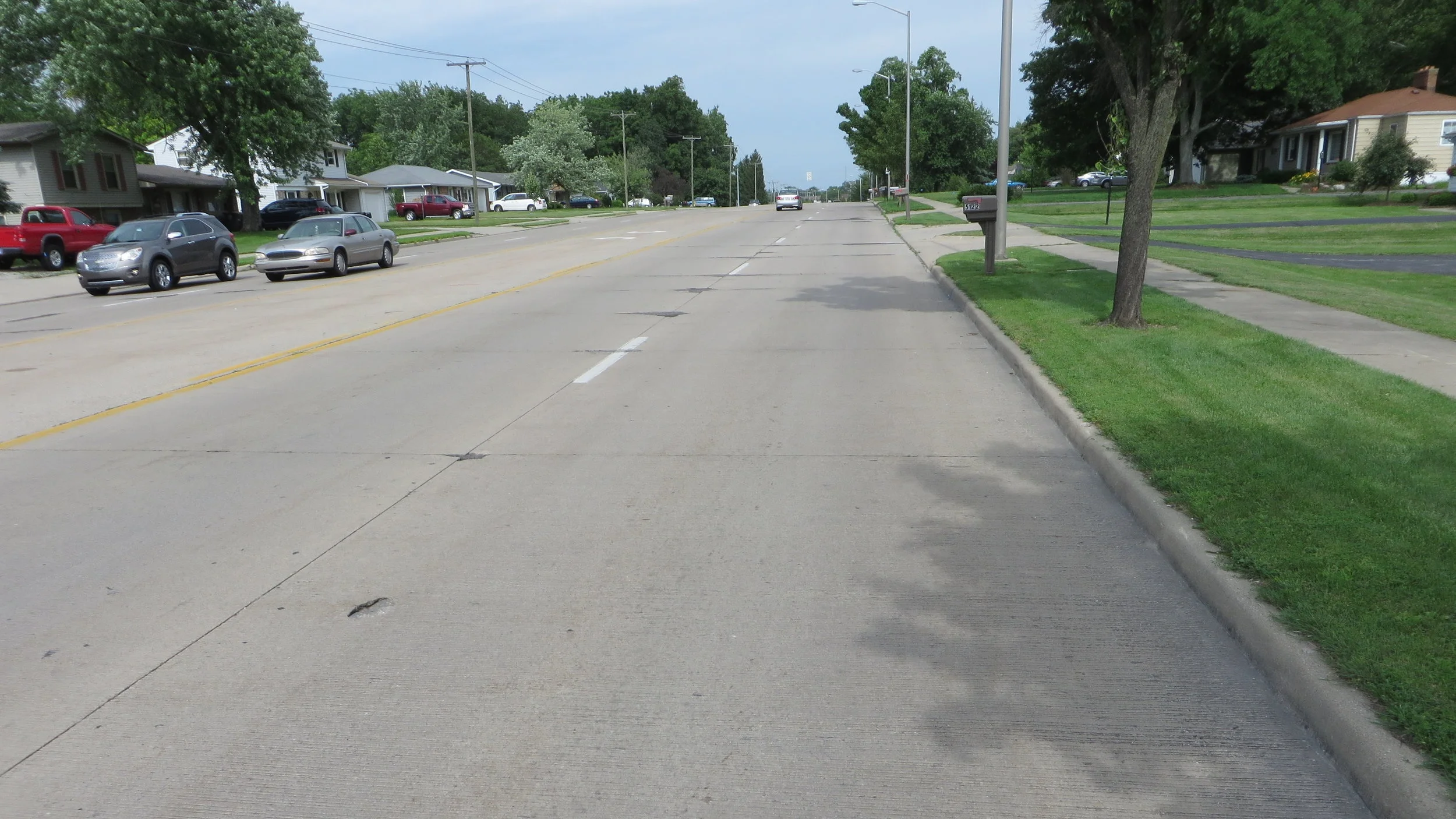
The City of Fort Wayne, Indiana selected APTech as a subcontractor to evaluate the condition of a 1.3-mile segment of East State Boulevard and develop rehabilitation design recommendations.
Our work for this project included:
Collecting and reviewing records regarding the existing pavement structure and the traffic loadings applied to the pavement.
Performing a Pavement Condition Index survey with 100 percent coverage to objectively rate the condition of the pavement.
Mapping the locations, severity levels, and amounts of pavement distresses to identify appropriate treatments and estimate quantities of treatments.
Conducting falling weight deflectometer (FWD) testing to assess the pavement's structural condition.
Developing coring and subsurface boring plans and dynamic cone penetrometer testing plans, and evaluating the test results to determine layer thicknesses, subsurface conditions, and subgrade support conditions.
Analyzing historical traffic data and developing projected traffic growth rates for pavement design development.
Quantifying the structural properties of the pavement and determining the pavement's load-carrying capacity through FWD backcalculation analysis.
Developing feasible rehabilitation design options and performing a life-cycle cost analysis to identify the most cost-effective strategy.
Summarized this information and presented a recommended rehabilitation design in a project report.
The results of the evaluation indicated that concrete pavement restoration in the form of slab replacements, partial- and full-depth portland cement concrete repairs, diamond grinding, and joint resealing, was the preferred rehabilitation strategy. The recommendation was accepted, and plans were made to implement this long-term, cost-effective approach.

In 2002, the Missouri Department of Transportation (MoDOT) Multimodal Operations – Aviation Section (Aviation Section) selected APTech to implement an Airport Pavement Management System (APMS), beginning with a pilot study involving five airports. The project was so successful that MoDOT retained APTech to expand the APMS to include most of the agency’s paved, publicly owned public-use airports. Since then, APTech has partnered with MoDOT several times to update the APMS, including the current on-call project. The APMS now contains seventy airports. Each update is typically divided into three phases with approximately one-third of the system’s airports inspected during each phase.
APTech’s work for each project phase includes updating the systems inventory and network definition and conducting Pavement Condition Index (PCI) inspections. The APTech team also customizes the PAVER database, analyzes the collected data, and generates project reports. In addition, APTech uses the collected data to develop a 5-year maintenance and rehabilitation (M&R) program.
In 2011, APTech integrated the MoDOT Aviation Section’s APMS to APTech’s web-based interactive pavement data visualization tool, IDEA. Since then, IDEA has been a valuable resource to share pavement information in an easy-to-understand format. Consistent updates provide the MoDOT Aviation Section and stakeholders with the most accurate and updated information available. During previous project updates, APTech conducted a webinar on the use of the IDEA program for airport sponsors, performed structural testing with a falling-weight deflectometer (FWD), and calculated Pavement Condition Numbers (PCNs) for selected pavements.
APTech’s work allows the MoDOT Aviation Section to proactively manage the pavement infrastructure at its airports in the most fiscally responsible manner possible. It provides the MoDOT Aviation Section with the means to anticipate pavement-related funding needs, as well as provides National Plan of Integrated Airport Systems (NPIAS) airports with the information needed to remain in compliance with Public Law 103-305 regarding pavement maintenance management.

In 2021, the City of Lynnwood, Washington determined that it required a pavement management system (PMS) to improve planning for budget and work needs and to better communicate conditions and needs to decision-makers. The City has a working relationship with Perteet, Inc. (Perteet) to support planning activities. APTech, as a subcontractor to Perteet, was selected to assist with roadway condition data collection, implementation of Cartegraph’s Operations Management System (OMS), and to provide training in the use of OMS to the City and Perteet so that they can use this tool effectively in the future.
Our work included:
Collecting pavement condition data for about 175 centerline miles of City streets using our automated data condition collection vehicle (EDGE)
Using collected images and data to report distress type, severity, and extent for each road segment
Loading the collected data into OMS
Providing guidance in the configuration of OMS for analyses
Documenting our work in a summary report detailing current conditions and recommendations
Due to the success of the work, we were asked to participate as an on-call consultant to help the City and Perteet continue to use the PMS system. This work allows the City and its representatives to proactively plan for budget and work needs in the future and to clearly communicate work plans and budget impacts using map-based tools to decision-makers. This will in turn enable the City to make better use of limited resources and more informed data-driven decision making.

In 2023, the Niagara Frontier Transportation Authority (NFTA) partnered with APTech as a subcontractor for the for the rehabilitation of the General Aviation (GA) apron, Taxiways P and Q, and associated connector taxiways at Buffalo Niagara International Airport (BNIA). These pavements consist of a variety of concrete and asphalt cross sections with varying construction ages. Due to age and deterioration, the pavements required rehabilitation to maintain safe operations for the GA section of the airport.
This project included the preliminary and final pavement design. To begin, APTech reviewed the results of the planned geotechnical investigation and the existing pavement records. Next, the APTech team conducted nondestructive deflection testing using a falling weight deflectometer. The results provided a wealth of information about the load-carrying capabilities of the pavement, which APTech used in conjunction with the results of the records review to develop design alternatives. The design strategies were determined in accordance with FAA Advisory Circular (AC) 150/5320-6G, Airport Pavement Design and Evaluation and using FAA’s FAARFIELD pavement design software. The results of the data review, analyses, and recommendations for the project were presented in a detailed pavement design report.
The pavement design alternatives developed for this project included reconstruction with a new concrete or asphalt pavement and rubblization of the taxiway pavements followed by an asphalt overlay. The reconstruction alternatives removed all older pavement materials that could negatively impact construction and performance due to continued deterioration. Reconstruction also allowed existing grades to be maintained, such as at hangar locations, and created improved support, especially in the apron areas. Rubblization allowed a significant portion of the taxiway to be reused, reducing the amount of material removal and new material construction. Project specifications were also developed for the included pavement materials.

Located in Warwick, Rhode Island, T. F. Green International Airport (PVD) is a small-hub airport that routinely offers international flights. The asphalt pavement was showing deterioration and needed to be restored to maintain operations. Working as a subcontractor, APTech performed pavement evaluation and design services for the rehabilitation of Taxiway C at PVD. The portion of Taxiway C located within approximately 800 feet adjacent to Runway 5-23 was also reconstructed and realigned to address geometric concerns.
This project included the preliminary and final pavement design. To begin, APTech reviewed the results of the planned geotechnical investigation and the existing pavement records. Next, the APTech team conducted nondestructive deflection testing using a falling weight deflectometer. The results provided a wealth of information about the load-carrying capabilities of the pavement, which APTech used in conjunction with the results of the records review to develop design alternatives. The design strategies were determined in accordance with FAA Advisory Circular (AC) 150/5320-6G, Airport Pavement Design and Evaluation and using FAA’s FAARFIELD pavement design software. The results of the data review, analyses, and recommendations for the project were presented in a detailed pavement design report.
Multiple rehabilitation alternatives were considered, including asphalt surface replacement, full-depth reclamation, and concrete overlay. While these alternatives were structurally feasible, the taxiway required additional pavement structure to accommodate the anticipated aircraft traffic. The additional structural requirements for these alternatives made matching existing grades at each end of the section difficult. Milling a portion of the existing asphalt surface and placing a new asphalt overlay was not considered because of the deteriorated condition of the existing asphalt. A new asphalt pavement was ultimately selected.

The Iowa DOT’s Modal Transportation Bureau has been proactive in managing the pavements at Iowa airports since the early 1990s, and in 1997, the Modal Transportation Bureau became APTech’s first state airport pavement management client. Due to its satisfaction with APTech, the Modal Transportation Bureau continued to select the APTech team to conduct its APMS updates on several projects spanning from 2003 to 2027.
The project is divided into three phases. APTech inspects approximately one-third of the system’s National Plan of Integrated Airport Systems (NPIAS) airports during each phase, with non-NPIAS airports typically inspected less frequently. During the most recent update, APTech is compiling systems inventory information provided by the Modal Transportation Bureau and updating network definition and associated airport CAD maps. The APTech team is also completing PCI inspections, updating and customizing the PAVER database, and developing M&R plans for preserving the pavement infrastructure. Additionally, APTech is developing individual airport and statewide pavement management reports. Previous updates have also included PCN determinations for runways at the project airports.
During each project, APTech updates the Modal Transportation Bureau’s interactive data visualization tool, IDEA, which provides access to the most requested pavement management information without requiring the user to obtain and operate the pavement management system. APTech has also conducted webinars on the use of IDEA and periodically provides presentations at Iowa Public Airports Association Conferences on topics related to the APMS.

The City of Maryville, Missouri chose Applied Pavement Technology (APTech) to conduct a citywide pavement assessment and develop a management plan for approximately 250 miles of road.
From 2023 to 2024, APTech worked with Maryville to collect pavement data and establish a Pavement Management System (PMS). APTech presented multiple PMS options, showcasing how each software solution would fit the City’s long-term needs and budgetary requirements. The City chose StreetLogix for their PMS. APTech then used its Enhanced Data Gathering Equipment (EDGE) vehicle to collect automated pavement condition data on all City-maintained roadways. Trained APTech pavement inspection technicians reviewed collected data to verify distresses were correctly identified and configured StreetLogix PMS with this data, establishing pavement families, setting up performance models, and defining treatment strategies. APTech also developed 20-year scenarios for the City to help them understand how different funding levels would affect their road network.
APTech’s work collecting pavement condition data and establishing a PMS provided the City with a baseline for work planning and budgeting, an objective review of maintenance program effectiveness, and recommendations for the most efficient use of agency resources. These deliverables will help the City make accountable, data-driven, performance-based decisions about needs.

Since 2008, APTech has served as the pavement management consultant for the Wayne County Airport Authority (WCAA), providing services at both Detroit Metropolitan Wayne County Airport (DTW) and Willow Run Airport. APTech served as the prime consultants from 2008 to 2016 and served as subconsultant for the 2018 and 2022 pavement management program (PMP) updates at DTW through an on-call contract, while still playing a lead role.
APTech began the latest PMP update by reviewing construction records to update the existing airport network definition maps. Our team then assessed the conditions on runways, taxiways, shoulders, aprons, and blast pads using the Pavement Condition Index (PCI) methodology and entered the data into the airport’s PAVER database. APTech’s engineers then used the data to forecast future pavement conditions through performance modeling and helped develop a capital improvement plan to cost-effectively address the airport’s pavement-related needs. APTech also completed a structural evaluation, determining Pavement Classification Ratings (PCRs) for the runways. During previous updates, APTech determined a foreign object damage (FOD) potential index for each pavement section and performed falling weight deflectometer (FWD) testing on the runways.
This project came with multiple unique challenges. WCAA has added additional pavements into the system during almost every update since 2008. Such updates require meticulous project administration and strategic thinking to create a logical hierarchy within the pavement network for data collection and management. Additionally, because of the way WCAA uses data, gate areas on the terminal apron were divided into individual pavement sections to prioritize needs and better align with the way the airport completes repairs and rehabilitation. The team also worked with the airport to avoid impacting operations by performing PCI inspections overnight using artificial lighting. The project timeline set by the airport required that APTech conduct PCI inspections during the winter in northern Michigan, which necessitated schedule flexibility by the team to work around inclement weather to stay on schedule.
The project concluded with the development of a final report, an abridged executive summary, and IDEA—APTech’s web-based interactive and user-friendly data visualization tool. By including deliverables in a variety of formats, stakeholders with various levels of pavement engineering familiarity were able to engage with the project’s results and understand the importance of effective pavement management. WCAA places a high importance on preserving pavement infrastructure, and APTech’s pavement management services allow them to proactively manage their pavement assets and make the most efficient use of their funding dollars.