
About the Project
To assist transportation agencies in recognizing how the framework and principles of transportation asset management relate to their business processes, the National Highway Institute (NHI) developed Course 136106A, An Introduction to Transportation Asset Management with Workshop. This course assists mid- to senior-level managers with the development and enhancement of their asset management program. The instructor-led portion of the course teaches participants the characteristics of asset management programs, a targeted workshop helps participants identify action items that can be taken to enhance the use of asset management principles, and several facilitated workshops provide opportunities for strengthening and enhancing the asset management activities currently in use.
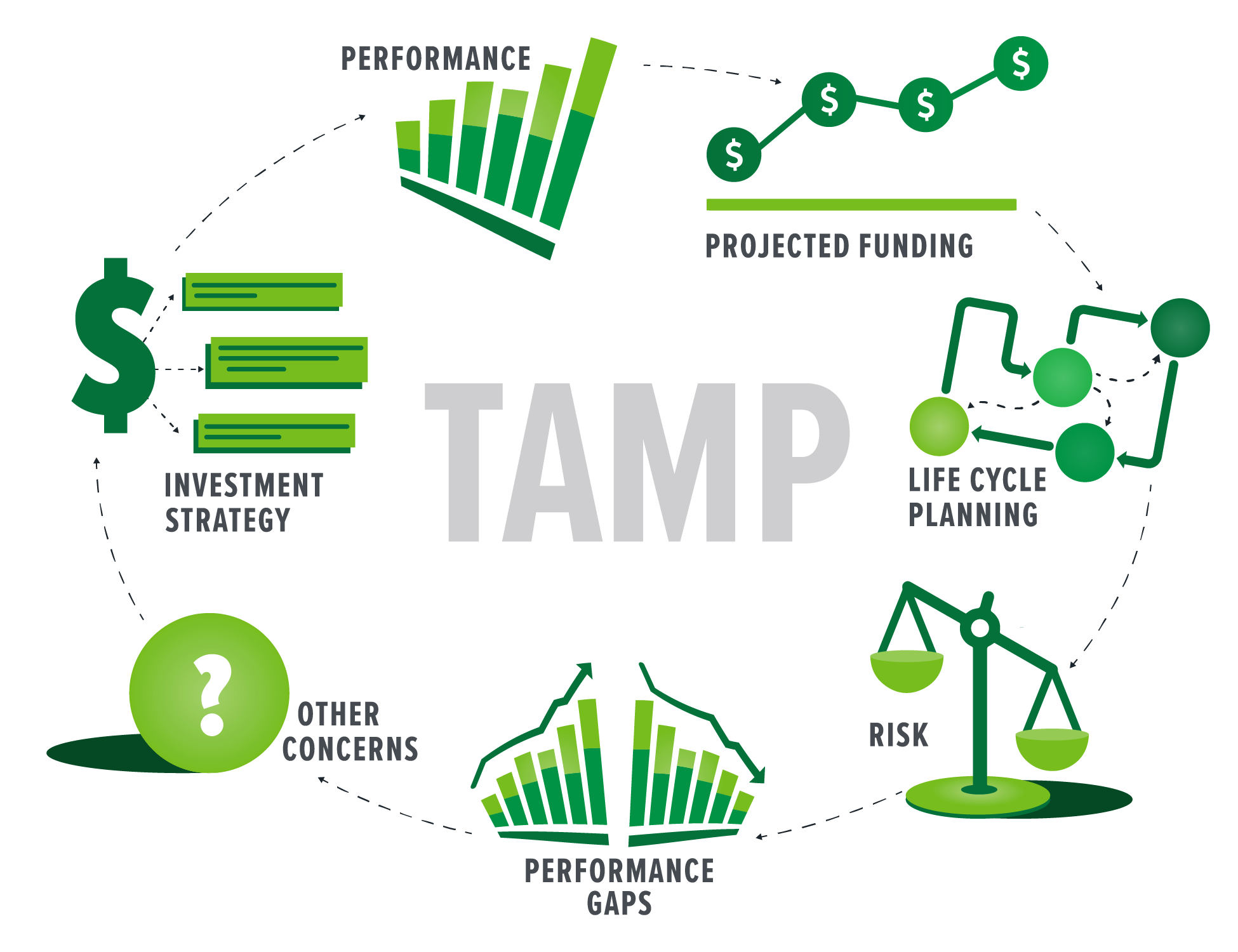
In 2013, NHI began offering a second course in the series, Course 136106B, Development of a Transportation Asset Management Plan (TAMP). This course introduces the role of the TAMP as a planning, communication, and accountability tool and provides the information necessary for an agency to develop or enhance their TAMP. The course focuses on three primary TAMP components, including strategic performance measurement, risk assessment, and financial management. The course materials include templates and guidelines for use in developing a TAMP. In addition, there is a 1-hour self-study lesson that is completed prior to the instructor-led portion of the course.
The NHI selected Applied Pavement Technology, Inc. (APTech) to deliver both asset management courses due to APTech’s expertise in transportation asset management and its strong reputation as a leader in developing and delivering training materials that achieve course objectives. The APTech instructors consistently receive high ratings for the quality of instruction and have been awarded several Instructor of Excellence Awards from NHI.

In 2021, the North Dakota DOT (NDDOT) contracted with Applied Pavement Technology, Inc. (APTech) to update and implement its federally compliant risk-based transportation asset management plan. The plan documents NDDOT’s practices and planned investments for managing the agency’s over 17,400 lane-miles of pavement and more than 2,300 highway bridges from 2022 through 2031. NDDOT was looking for a firm that could help them streamline their Transportation Asset Management Plan (TAMP) and better connect it to its family of plans while identifying opportunities to improve asset management and capital programming processes. NDDOT is striving to develop an engaging and highly graphical TAMP that complies with Federal requirements in forty pages or less.
“NDDOT challenged us with creating a visually appealing TAMP that is less than half as long as most TAMPs. This caused us to rethink how the TAMP is organized and how required information is presented.”
— Brad Allen, P.E. • Project Manager
APTech is leading all aspects of the TAMP development, including the documentation of existing asset management processes, financial planning, life cycle planning, and risk analysis. In developing the TAMP, APTech conducted an innovative gap analysis based on future scenarios established in the NDDOT long range statewide transportation plan, Transportation Connection. These scenarios, titled Urban Centers, Rural Renaissance, Smart and Connected, and Ghost Towns, identified possible economic futures for the state. APTech developed a gap analysis that forecasted pavement and bridge conditions under each of these scenarios and compared those to forecasts based on each alternate scenario. The results are presented in the TAMP with a 2-page infographic.
As part of the TAMP update, APTech is supporting NDDOT with internal and external stakeholder outreach to map current program development processes. This involves engagement with a broad group of internal and external stakeholders including local Federal Highway Administration (FHWA) Division partners early in the TAMP development process. APTech facilitated a series of workshops and interviews with stakeholders to develop detailed process maps and identified risks and inefficiencies in current processes. Working with NDDOT Asset Management staff, APTech developed recommendations for improvements to existing business processes that led to more effective long-term investment decisions for the NDDOT. Following certification of the TAMP, APTech will work with NDDOT to implement selected improvements.
The project demonstrates the team’s ability to develop implementation guidance to support the successful transition to a risk-based, strategic approach to managing transportation assets that leverages available tools and technology. The North Dakota TAMP update does not involve services related to transportation performance management (TPM)

In 2019, APTech was awarded a contract to administer the Nevada Local Technical Assistance Program (NVLTAP). The objective of the NVLTAP is to advance local agency transportation programs and practices on a fixed, 4-year budget of $300K through training, technical assistance, technology transfer, and workforce development services.
As the program’s administrator, APTech’s responsibilities include assessing needs, identifying equitable and accessible solutions, providing technical assistance services, monitoring program progress, reporting to the NVLTAP Advisory Board, and maintaining relationships with NVLTAP stakeholders. Technical assistance services have included creating a pavement management spreadsheet tool, safety grant application support, PASER condition survey demonstrations, pavement inventory development, and local road safety plan consulting.
APTech provides NVLTAP in-person and virtual technical training to develop an effective, efficient, and innovating workforce. Training topics include pavements, bridges, workplace and traffic safety, environment, civil rights, and foundational skills. APTech schedules forty-four instructor-led courses in the NVLTAP catalog and regularly creates new courses in response to local agency needs. To manage this large course catalogue, APTech created a learning management system for participants to register for courses, complete additional self-paced courses, and track their course completion and progress towards a Road Scholar Program completion.
APTech worked with the Nevada LTAP Advisory Board to plan, promote and hold the first Nevada Asphalt Conference on February 15-16, 2023. The conference exceeded expectations and connected 183 attendees with thirteen exhibitors and expertise from across the region.

APTech was selected to develop the initial 2018 Transportation Asset Management Plan (TAMP) for the Kentucky Transportation Cabinet (KYTC). In 2021, KYTC modified its contract so that APTech could further assist with the development of the agency’s 2022 TAMP update. These TAMPs are required by the Federal Highway Administration and must be updated at least every four years.
Both TAMPs documented the Cabinet’s practices for managing the state-maintained pavements and bridges. Through the process of developing the TAMPs, APTech assisted the KYTC with the development of 10-year financial plans and investment strategies that considered both risks and life cycle plan (LCP) strategies. The 2022 TAMP update incorporated KYTC’s efforts to build a resilient transportation system into its investment strategies.
The KYTC TAMP reflects the agency’s strong commitment to optimized preservation strategies that keep assets in Good condition while those in Fair condition are either improved or preserved so they do not drop into a Poor condition. While this investment strategy makes the most of available funding, the KYTC TAMP demonstrates the need for additional funding to achieve its desired state of good repair. Each TAMP serves as effective communication tool by documenting the level of funding needed and forecasting expected condition gaps if the additional funding is not obtained.
To support the implementation of asset management throughout the Cabinet, APTech provided a roadmap that outlined suggested technical, organizational, workforce development, and policy initiatives in 2018. The APTech team also facilitated a workshop for executive leadership to promote a sustainable, asset management program.

Ohio DOT is responsible for managing a transportation network with a capital program in excess of $2 billion. In response to 2012’s “Moving Ahead for Progress in the 21st Century Act” (MAP-21) and to better manage its sizable obligations, the Department sought to implement improved business processes to support its asset management activities and develop a Transportation Asset Management Plan (TAMP). To accomplish this goal, the Ohio DOT selected Applied Pavement Technology, Inc. (APTech) to develop its 2018 long-term, risk-based TAMP and to provide recommendations for changes to existing practices to support the implementation of the TAMP.
During this project, APTech developed a customized TAMP that describes the processes used to manage the state-maintained pavements, bridges, and culverts and establishes an investment strategy that makes the best use of available funding. In addition, APTech helped identify improvements to existing business processes that would lead to more effective long-term investment decisions for the Ohio DOT. Finally, workshops were facilitated with the Ohio DOT personnel to support workforce development efforts needed to implement the new business processes.
This TAMP is used in systematic and strategic investment decisions that use funds more effectively and support the Ohio DOT’s mission to: take care of what they have, make the system work better, improve safety, and enhance capacity.
The project demonstrates the team’s ability to develop implementation guidance that led to the successful transition to a risk-based, strategic approach to managing transportation assets that leverages available tools and technology.

The Mississippi DOT selected APTech to update the existing pavement management process documentation, develop a Quality Management Plan (QMP) for pavement management data collection activities, and provide recommendations for improving quality checks on pavement condition data collected by vendors.
Our work:
Reviewed the Department's existing pavement management policies and interviewing staff members.
Conducted a thorough literature review of QMPs from other agencies to develop a comprehensive Pavement Management Manual.
Developed a QMP to guide the collection of pavement condition data using both automated and manual techniques and to satisfy the requirements under the MAP-21 Act for data quality.
Developed a Technical Brief to summarize the content found in the Pavement Management Manual and the QMP as part of the Department's outreach opportunities.

In 2012, federal highway legislation commonly known as the “Moving Ahead for Progress in the 21st Century Act,” or MAP-21, was enacted to provide funding for transportation programs and establish a performance-based Federal highway program. The legislation included a requirement for States to develop “a risk-based asset management plan for the National Highway System to improve or preserve the condition of the assets and the performance of the system.” The Nevada Department of Transportation (NDOT) set out to develop a transportation asset management plan (TAMP) that both meets the MAP-21 requirements and establishes a framework for developing future plans. To accomplish this goal, the Nevada DOT selected us to develop a long-term, risk-based TAMP.
Our work included:
Evaluating the data availability and maturity for twenty-five different transportation assets managed by the Nevada DOT.
Conducting interviews with agency personnel and analyzed the resulting data with respect to its contribution to developing the TAMP.
Developing a rating process to consider factors such as the availability of inventory information, the existence of performance targets, the availability of deterioration rates, and the sophistication of financial analysis tool. The ratings were used to assign an overall level of maturity to each asset type.
Establishing a prioritization process to develop recommendations for which assets to include in the initial TAMP.
Developing a TAMP that includes pavement, bridge, and ITS assets.
The TAMP was designed to summarize inventory and condition information, to establish performance targets to be met, and to develop investment strategies that demonstrate a data-driven, cost-effective approach to maintaining and preserving transportation assets for 10 years. In addition, the steps involved in developing the TAMP were documented so they will serve as a resource for future updates to the TAMP.

The use of asset management principles in state highway agencies (SHAs) has become increasingly important as those agencies respond to increasing demands on the highway system and demands for improved transparency and accountability in agency decisions. Asset management provides a framework for using performance data to make sound investment decisions that are aligned with the agency’s strategic objectives.
To help identify and prioritize changes that are needed to support asset management in a transportation agency, the American Association of State Highway and Transportation Officials (AASHTO) published the Transportation Asset Management Guide - A Focus on Implementation. The Guide describes the use of a gap analysis as an objective and structured process for evaluating current and desired asset management practices and to identify priorities for actions that are needed to achieve agency goals.
When the Guide was developed, a prototype of a tool was developed to support the use of a gap analysis by SHAs. However, the original tool was developed based on experience in New Zealand rather than the U.S. and was not easily modifiable. To remedy these difficulties, the National Cooperative Research Program (NCHRP) selected APTech to develop a new gap analysis tool that is more intuitive, well described, user-friendly, and applicable for transportation practitioners and decision-makers in the United States.
To determine the capabilities needed in the improved tool, we are conducted a literature and process review. The data from these activities enabled us to develop helpful guidelines for conducting a gap analysis and an intuitive and user-friendly gap analysis spreadsheet tool that is relevant to transportation asset management in the United States. The gap analysis spreadsheet tool will be made available to SHAs through AASHTO and outreach activities such as webinars and workshops. National Highway Institute courses will also be used to promote the tool’s use.

We provided Clackamas County with a Transportation Asset Management (TAM) Strategic Plan within its Department of Transportation and Development (DTD). The TAM Strategic Plan focused on current assets and processes, but the long-term expectation is that the Plan will support a dynamic program that effortlessly adapts to the addition of other future assets. The TAM Strategic Plan serves as a roadmap that the DTD can use to:
Integrate all transportation data sets and tools to a consistent set of standards.
Establish and document efficient processes.
Integrate decision making across business units.
Implement effective decision support tools.
The project began by developing asset management objectives for the agency by conducting on-site workshops, leading DTD staff through a self-assessment effort, and conducting a review of current and desired information technology systems.
Using the information gathered in the previous phase, APTech worked with the agency to establish a baseline of the agency’s current TAM maturity. This was done in terms of People (organization and policies), Processes (practices and internal controls), Systems (tools and technologies), and Data (content, integration, and governance) through a combination of phone interviews, on-site workshops, and spreadsheet tools.
Next, APTech led the agency through a gap analysis effort. This was completed through on-site workshops and phone interviews to compare baselines with goals in order to identify and prioritize strategies for achieving their goals. Each strategy included action items with scope, schedule, and cost information. We then developed a roadmap document that defined the path to achieving the agency’s TAM goals. Finally we provided support to the DTD during initial implementation efforts.
The Outcome
The TAM Strategic Plan provided direction to DTD management and staff, allowing for a coordinated TAM implementation effort. The agency anticipates significantly increased funding for asset preservation, due to a newly passed State revenue bill. DTD expects the plan to facilitate integration of its maintenance and capital planning efforts, allowing the agency to make the best use of these new funds and ensure on-time delivery of future highway projects.

As part of the FHWA’s efforts to implement performance-based transportation measures as required by the Moving Ahead for Progress in the 21st Century (MAP-21) Act, it contracted Applied Pavement Technology, Inc. (APTech) to identify more strategic next-generation measures to strengthen performance management and better link investments to long term performance. The objectives of the project were to identify, or conceptually develop, 1) more strategic pavement performance measures and their readiness for implementation and 2) methodologies to enable full implementation of a comprehensive asset management plan.
During task 1, APTech performed an in-depth literature review to identify potential pavement performance measures and investigate their feasibility. Considerations included how the performance data would be collected, analyzed, and presented, as well as potential costs and benefits of using the performance measure. Thirteen potential pavement performance measures were deemed worthy of more comprehensive evaluation. The proposed framework for further evaluation includes a condition metric, a life-cycle efficiency metric, and a financial health metric.
During task 2, APTech explored methodologies to enable full implementation of a comprehensive asset management plan by reviewing existing cross-asset trade-off and cross-asset allocation methods and documenting them in a technical memorandum. APTech then developed a methodology that uses the three common next-generation performance measures as the foundation of trade-off decisions and outcome reporting. The methodology was then described and conceptually illustrated in terms of its application with the pavements, bridges, and culverts asset areas.
During the work conducted during Tasks 1 and 2, it became apparent that there were gaps in available data and analysis tools to support the use of the most promising measures in transportation agencies, so APTech developed two work plans for future FHWA projects to further validate and test the proposed performance measures and cross-asset methodology.

To promote the use of asset management and the development of asset management plans at the local level in Indiana, the Indiana LTAP contracted us to develop an Asset Management Guide for Local Agencies and to enhance the existing asset management training materials.
For phase 1 of the project, we first reviewed the existing asset management training materials and developed specific recommendations for workshop materials to foster more interaction during the workshops. We also developed a participant workbook, which included educational material, worksheets, and group activities.
During phase 2, we created a customized guidance document that introduces asset management and a five-step process for developing an asset management plan. The Guide focuses on building an asset inventory, rating asset conditions, using information to manage assets, developing a cost-effective program, and developing the plan. The Asset Management Guide for Local Agencies in Indiana was designed to be easy to read and incorporates graphics and call-out boxes to highlight important material.
Our work is being widely used by local agencies in Indiana to develop effective asset management plans and to train agency personnel.

As a subcontractor, APTech was selected by the National Cooperative Highway Research Program (NCHRP) to update the Transportation Asset Management (TAM) Guide published by the American Association of State Highway and Transportation Officials (AASHTO). This guide provides methods to approach and implement asset management at state departments of transportation (DOTs).
In the first phase of the effort, the team assessed the effectiveness of the previous AASHTO Asset Management Guide and developed strategies for improving the Guide’s effectiveness. The second phase of the project focused on writing the content of the guide, presenting the guidance in both print and digital formats, and implementing a communication and outreach plan to disseminate the new guide to relevant audiences. Guidance included the following topics: TAM Strategy and Planning, Organization and People, Maximizing the Performance of Transportation Assets, Resource Allocation, Monitoring and Adjustment, and Information and Systems.
The resulting Guide is now available in a pdf format and in an online, searchable tool through AASHTO. As part of the project, APTech supported the design and delivery of an interactive workshop at the Transportation Research Board’s Annual Meeting in which participants worked in teams using the guide to develop solutions to practical asset management challenges.
To assist transportation agencies in recognizing how the framework and principles of transportation asset management relate to their business processes, the National Highway Institute (NHI) developed Course 136106A, An Introduction to Transportation Asset Management with Workshop. This course assists mid- to senior-level managers with the development and enhancement of their asset management program. The instructor-led portion of the course teaches participants the characteristics of asset management programs, a targeted workshop helps participants identify action items that can be taken to enhance the use of asset management principles, and several facilitated workshops provide opportunities for strengthening and enhancing the asset management activities currently in use.
In 2013, NHI began offering a second course in the series, Course 136106B, Development of a Transportation Asset Management Plan (TAMP). This course introduces the role of the TAMP as a planning, communication, and accountability tool and provides the information necessary for an agency to develop or enhance their TAMP. The course focuses on three primary TAMP components, including strategic performance measurement, risk assessment, and financial management. The course materials include templates and guidelines for use in developing a TAMP. In addition, there is a 1-hour self-study lesson that is completed prior to the instructor-led portion of the course.
The NHI selected Applied Pavement Technology, Inc. (APTech) to deliver both asset management courses due to APTech’s expertise in transportation asset management and its strong reputation as a leader in developing and delivering training materials that achieve course objectives. The APTech instructors consistently receive high ratings for the quality of instruction and have been awarded several Instructor of Excellence Awards from NHI.

PAVER Pavement Management Software is widely used throughout the transportation industry, with major supporters including the U.S. Air Force, the U.S. Army, the U.S. Navy, the Federal Aviation Administration (FAA), and the Federal Highway Administration (FHWA). APTech provides PAVER training for clients wishing to better understand the features and functionality of the software. We customize our training to meet the needs of your agency by tailoring the material to participants such as executive staff, engineering, maintenance departments, and GIS specialists. By structuring the trainings to specific groups, we enable all levels within the agency to see the benefit that pavement management can add to the decision-making process.
We have conducted PAVER courses for clients across the nation and abroad. Past attendees include national and state agencies, commercial service airport staff, the FAA, the U.S. Government Accounting Office, and university graduate students. Our PAVER training is customized in a variety of formats, including on-site training and webinars. Training can occur over one or two days, depending on your needs.
Typically, our PAVER workshops include the following lessons:
Introduction PAVER 7 Training Course
Workshop 1. Installing PAVER 7 and Managing Your Database
Workshop 2. Moving Around PAVER 7
Workshop 3. Using the Inventory Module
Workshop 4. Work History
Workshop 5. Entering Condition Data
Workshop 6. Generating Reports and Charts
Workshop 7. Generating Prediction Models
Workshop 8. Developing Maintenance Policies
Workshop 9. Developing Major Rehabilitation Policies and Prioritization Guidelines
Workshop 10. Running a Condition Analysis
Workshop 11. Running a Needs Analysis
Workshop 12. Using the Wizards Module
Workshop 13. Using the Visual Menu
Workshop 14. GIS Assignment Tool

For over 13 years, we have worked with National Highway Institute to develop and deliver the latest in transportation training. This includes:
NHI 131139 Constructing and Inspecting Asphalt Paving Projects
NHI 134063 Maintenance Leadership Academy
NHI 134112 Principles and Practices of Enhanced Maintenance Management Systems
NHI 136106A An Introduction to Transportation Asset Management with Workshop
NHI 136106B Developing a Transportation Asset Management Plan
NHI 136002 Financial Planning for Transportation Asset Management
Participants consistently rate these courses highly, expressing appreciation for the quality of the content and the instructors.

The Airport Consultants Council (ACC), founded in 1978, is an international association created to advance airport consulting, represent the interests of airport consultant firms, and bring together experts of the aviation industry. Applied Pavement Technology, Inc. (APTech) has been involved with the ACC since the inception of the company in 1994.
Since 2003, APTech staff have developed and conducted workshops and classes for the ACC, including Techniques for Airfield Pavement Maintenance, Repair, & Rehabilitation and Airport Pavement Design & Evaluation. The Airport Pavement Design & Evaluation Workshop has been held once to twice a year in various locations across the United States, assisted by senior Federal Aviation Administration (FAA) staff. Professionals who enroll in the course include airport engineers and designers, airport maintenance and operations staff, pavement design and repair consultants, FAA staff, and aircraft manufacturers.
In recent years, the pavement design class has expanded into the Airport Pavement Design, Evaluation, and Analysis Workshop and it is regularly updated to reflect changes in the FAA’s pavement design advisory circular, FAARFIELD (the FAA’s associated pavement design software), and COMFAA (their Pavement Classification Number calculation software).

Since 2013, together with the American Association of Airport Executives (AAAE) and Delta Airports Consultants, Inc., Applied Pavement Technology, Inc. (APTech) has provided the lead instructor for the Airport Pavement Maintenance and Evaluation Workshop. This workshop provides information needed to:
Establish an effective airport pavement management and maintenance program,
Understand the performance of pavements and how to evaluate them,
Identify the characteristics of a good pavement management and maintenance program, and
Learn the current repair techniques used in the industry.
The workshop also helps airport officials make informed decisions about the maintenance of their pavements and address special considerations such as minimizing impacts on users, maximizing airport safety, and adapting to their local operating environments. The format of the workshop provides a forum that allows attendees to network with industry colleagues on common pavement maintenance challenges and address issues appropriate to both general aviation and air carrier airports.

May 2021, New York State Department of Transportation (NYSDOT) selected APTech to update its risk-based transportation asset management plan (TAMP). The plan documents NYSDOT’s practices and planned investments for managing the agency’s over 38,000 lane-miles of pavement and nearly 19,000 highway bridges from 2022 through 2031. APTech is supporting all aspects of the TAMP, including technical expertise, coordination, documentation, and editorial and graphic design support.
NYSDOT’s TAMP also describes the practices and expected investments of the New York State Thruway Authority (Thru-way) as the entire New York Thruway is on the National Highway System. APTech coordinated between the two agencies to gather needed information from each and compile the TAMP. The resulting plan includes all NYSDOT and Thru-way managed pavements and bridges.

In 2019, APTech assisted the Alaska Department of Transportation and Public Facilities (DOT&PF) in developing the agency’s fully compliant, risk-based transportation asset management plan (TAMP). Following up on this project, APTech was again chosen to update the agency’s TAMP in 2022. The plan documents DOT&PF’s practices and planned investments for managing the agency’s pavement and bridges on the National Highway System (NHS) from 2022 through 2031.
APTech led all aspects of the TAMP development, including updating the documentation of asset management processes, financial planning, and life cycle planning. Since implementing the previous TAMP, DOT&PF has embraced the spirit of the legislation by updating its asset management practices and implementing new pavement and bridge management systems that use the National Highway Performance Program metrics to inform investment decisions. APTech assisted the DOT&PF by using these new systems to update its TAMP, including significant support to refine the agency’s life-cycle planning analyses for bridges.
The Bipartisan Infrastructure Law (BIL), passed in November 2021, requires agencies to consider extreme weather and resilience in its life-cycle planning and risk analyses. Alaska’s extreme environment requires considerable focus on resilience in all aspects of asset management and engineering. The revised TAMP highlights the agency’s efforts to understand the conditions to which pavements and bridges will be exposed to construct infrastructure assets that can withstand Alaska’s harsh environment.
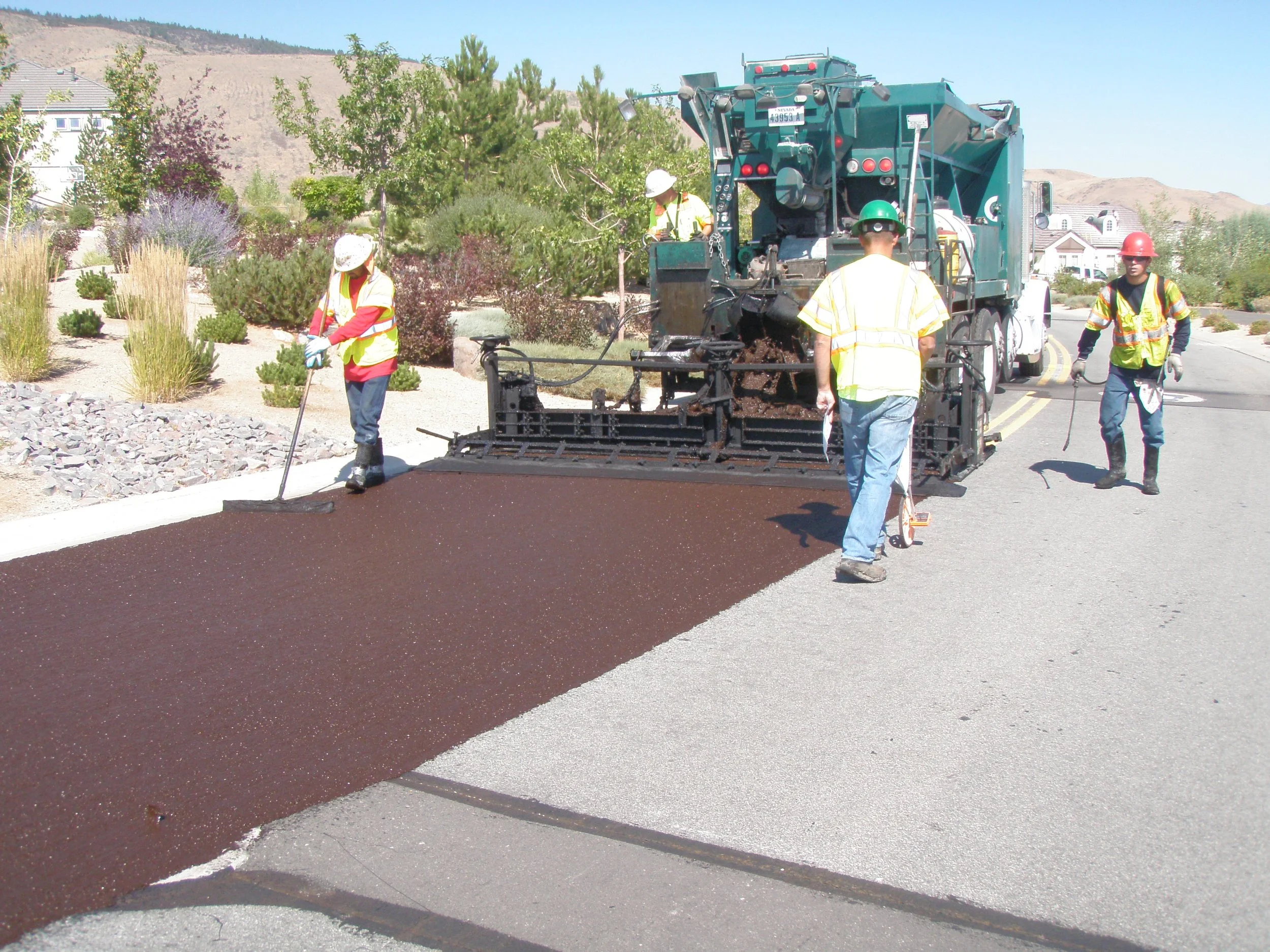
The Federal Highway Administration (FHWA) sponsored the development of National Highway Institute (NHI) Course 134063, Maintenance Leadership Academy to assist state, district, and county highway maintenance departments in training new pavement maintenance supervisors. The course consists of a 5-week, blended learning training program that includes instructor-led classroom training, independent study, and web-based training modules. The course prepares personnel for a future in the highway maintenance field by developing practical decision-making skills in six crucial areas, including maintenance administration, pavement and bridge preservation, roadside maintenance and drainage, weather-related operations, traffic services, safety and work zones, and environmental protection.
APTech worked with the NHI to develop this course in 2010 and has been presenting the course since its creation. In 2014, and again in 2019, the NHI selected APTech to deliver Course 134063, Maintenance Leadership Academy due to APTech’s strong reputation as a leader in developing and delivering training materials that achieve course objectives. The APTech instructors consistently receive high ratings for the quality of instruction and have been awarded several Instructor of Excellence Awards from NHI.