About the Project
The FHWA has an ongoing interest in developing and deploying technologies to support improved concrete pavement performance and longevity. In support of these goals, the FHWA is conducting an indefinite delivery/indefinite quantity (IDIQ) project to promote and advance recommended best practices for the design, construction, repair, and rehabilitation of concrete pavements. Under Task Order 6 of the IDIQ, APTech supported the FHWA in implementing the new composite pavement system technologies developed under the SHRP2 R21 study.
Under this contract, we:
assisted four state highway agencies (SHAs) in the planning, design, and construction of new composite pavement systems and documented the project installations through detailed case studies.
worked with the California Department of Transportation to host a multi-state showcase on composite pavements that included a field demonstration of a two-lift concrete pavement project on I-210 north of Los Angeles.
developed comprehensive training materials on the design and construction of composite pavement systems and delivered it to highway agencies across the country.
worked with the Virginia Department of Transportation to organize and facilitate a multi-state peer exchange meeting to share knowledge on the applicability of and implementation strategies for composite pavement systems.
participated in various regional and national outreach activities to share information on composite pavement systems.

As part of its ongoing Indefinite Delivery Indefinite Quantity (IDIQ) with the Federal Highway Administration (FHWA), Applied Pavement Technology, Inc. (APTech) was recently awarded a contract to investigate and document the direct and indirect impacts of wildfires on pavement infrastructure.
This effort involves completing a comprehensive literature search and a series of interviews with selected agency personnel who frequently contend with wildfire emergencies and their associated effects. The support for this project will cut across a range of administrative, technical, and outreach activities that will result in the development of a set of reports and associated outreach materials.
Key Tasks
Literature review summary report
Identifying case study states
Interviewing case study states
Development of project summary report
Development of tech brief
Conduction of national-level webinar
The APTech team’s work on this project will not only present the current state of knowledge on wildfire impacts on pavements, but also set the stage for future work in this area by identifying critical information gaps and research needs.
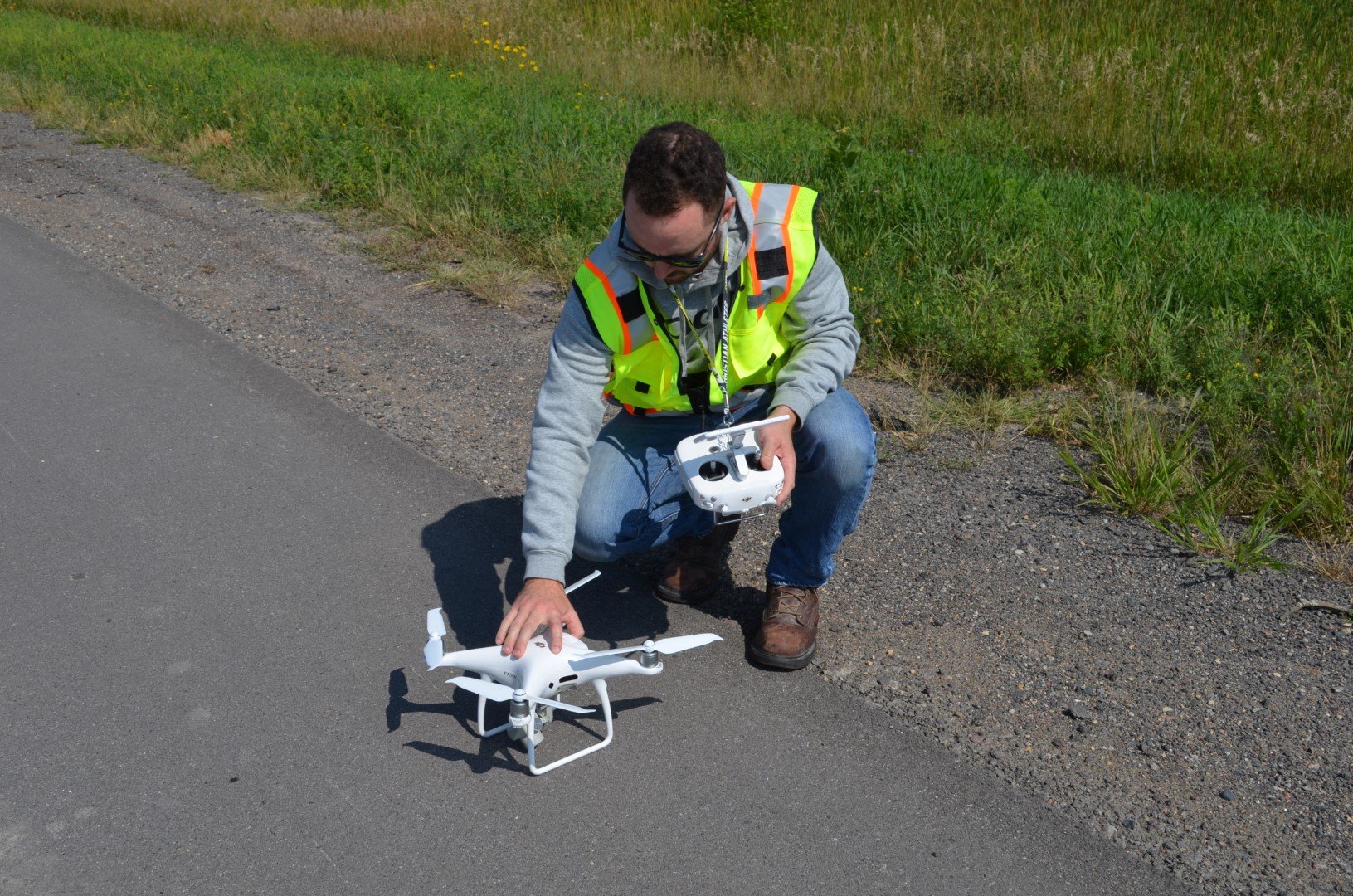
APTech, as a subcontractor to Iowa State University, is part of a team evaluating the use of small Unmanned Aircraft Systems (sUAS) to conduct airfield pavement inspections. The project includes a comprehensive review of current and emerging sUAS platforms and sUAS-mounted sensor technologies, along with the deployment of technology-platform combinations on airfield pavements to evaluate their technical specifications (i.e., performance and required criteria). This project is also providing an overview of potential standard processes and procedures for the use of sUAS for airport pavement inspection.
APTech contributed ground-truth survey results as part of a detailed field demonstration plan carried out at airports in four states. The practical lessons learned from the field demonstration projects will be captured, analyzed, and ultimately used to provide inputs to the development of a draft Advisory Circular addressing the use of sUAS to supplement airport pavement management program inspections. A final report including the research methodology and findings for the project, as well as an executive summary and list of recommendations for further research needs, will be submitted to the Federal Aviation Administration.
Key tasks include review of sUAS platforms, review of sUAS-mounted sensor technology, deployment of technology-platform combinations, development of standard sUAS processes and procedures for airport pavement inspection, contribution to ground-truth survey results, and development of reports.
Ultimately, expected outcomes from this research will include contributing to the development of standard processes and procedures, as well as technical specifications, for various types of sUAS and sUAS-mounted sensor technologies to consistently conduct safe, reliable, and effective sUAS-based airport pavement management inspections.

In 2021, the North Dakota DOT (NDDOT) contracted with Applied Pavement Technology, Inc. (APTech) to update and implement its federally compliant risk-based transportation asset management plan. The plan documents NDDOT’s practices and planned investments for managing the agency’s over 17,400 lane-miles of pavement and more than 2,300 highway bridges from 2022 through 2031. NDDOT was looking for a firm that could help them streamline their Transportation Asset Management Plan (TAMP) and better connect it to its family of plans while identifying opportunities to improve asset management and capital programming processes. NDDOT is striving to develop an engaging and highly graphical TAMP that complies with Federal requirements in forty pages or less.
“NDDOT challenged us with creating a visually appealing TAMP that is less than half as long as most TAMPs. This caused us to rethink how the TAMP is organized and how required information is presented.”
— Brad Allen, P.E. • Project Manager
APTech is leading all aspects of the TAMP development, including the documentation of existing asset management processes, financial planning, life cycle planning, and risk analysis. In developing the TAMP, APTech conducted an innovative gap analysis based on future scenarios established in the NDDOT long range statewide transportation plan, Transportation Connection. These scenarios, titled Urban Centers, Rural Renaissance, Smart and Connected, and Ghost Towns, identified possible economic futures for the state. APTech developed a gap analysis that forecasted pavement and bridge conditions under each of these scenarios and compared those to forecasts based on each alternate scenario. The results are presented in the TAMP with a 2-page infographic.
As part of the TAMP update, APTech is supporting NDDOT with internal and external stakeholder outreach to map current program development processes. This involves engagement with a broad group of internal and external stakeholders including local Federal Highway Administration (FHWA) Division partners early in the TAMP development process. APTech facilitated a series of workshops and interviews with stakeholders to develop detailed process maps and identified risks and inefficiencies in current processes. Working with NDDOT Asset Management staff, APTech developed recommendations for improvements to existing business processes that led to more effective long-term investment decisions for the NDDOT. Following certification of the TAMP, APTech will work with NDDOT to implement selected improvements.
The project demonstrates the team’s ability to develop implementation guidance to support the successful transition to a risk-based, strategic approach to managing transportation assets that leverages available tools and technology. The North Dakota TAMP update does not involve services related to transportation performance management (TPM)

In 2019, APTech was awarded a contract to administer the Nevada Local Technical Assistance Program (NVLTAP). The objective of the NVLTAP is to advance local agency transportation programs and practices on a fixed, 4-year budget of $300K through training, technical assistance, technology transfer, and workforce development services.
As the program’s administrator, APTech’s responsibilities include assessing needs, identifying equitable and accessible solutions, providing technical assistance services, monitoring program progress, reporting to the NVLTAP Advisory Board, and maintaining relationships with NVLTAP stakeholders. Technical assistance services have included creating a pavement management spreadsheet tool, safety grant application support, PASER condition survey demonstrations, pavement inventory development, and local road safety plan consulting.
APTech provides NVLTAP in-person and virtual technical training to develop an effective, efficient, and innovating workforce. Training topics include pavements, bridges, workplace and traffic safety, environment, civil rights, and foundational skills. APTech schedules forty-four instructor-led courses in the NVLTAP catalog and regularly creates new courses in response to local agency needs. To manage this large course catalogue, APTech created a learning management system for participants to register for courses, complete additional self-paced courses, and track their course completion and progress towards a Road Scholar Program completion.
APTech worked with the Nevada LTAP Advisory Board to plan, promote and hold the first Nevada Asphalt Conference on February 15-16, 2023. The conference exceeded expectations and connected 183 attendees with thirteen exhibitors and expertise from across the region.
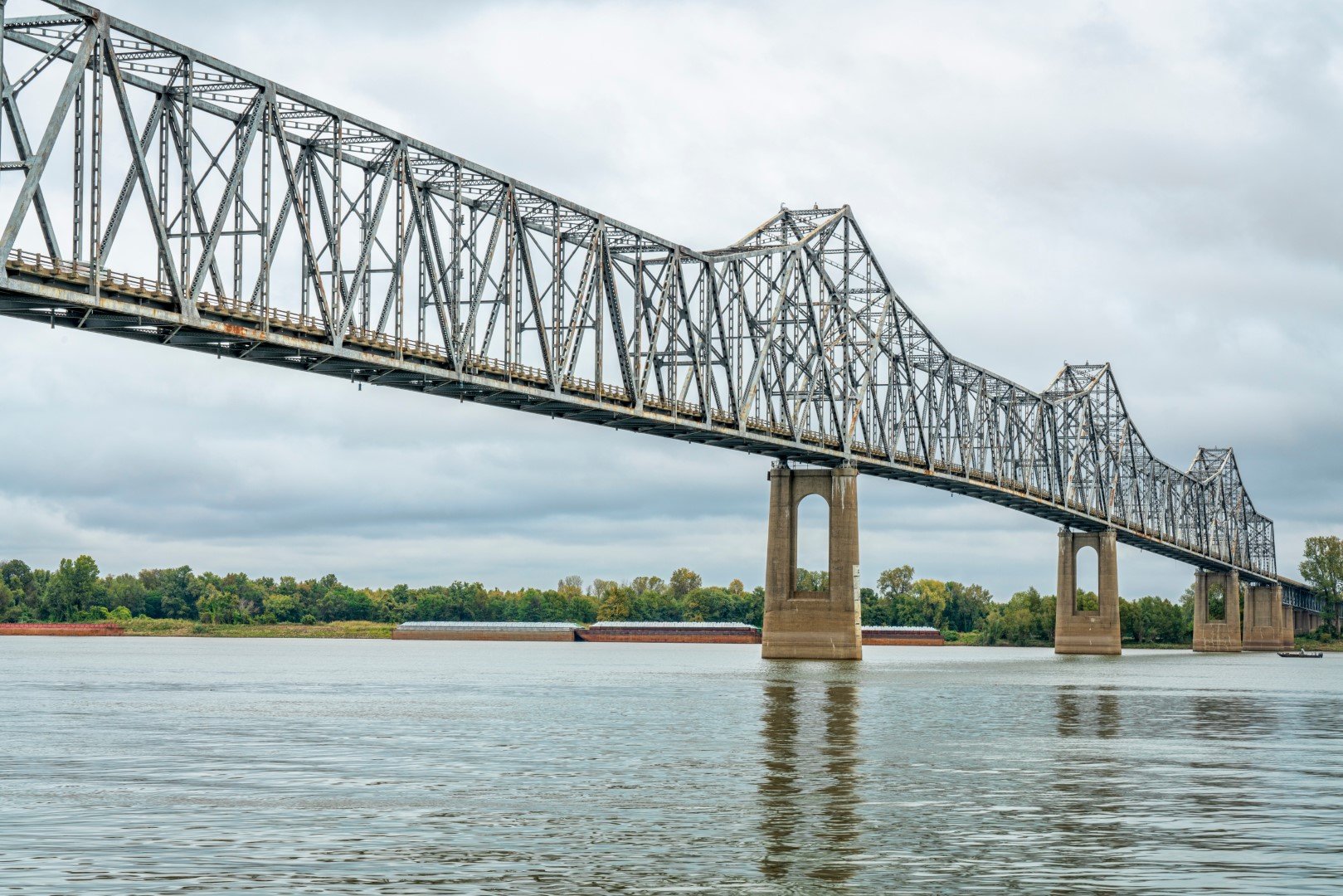
APTech was selected to develop the initial 2018 Transportation Asset Management Plan (TAMP) for the Kentucky Transportation Cabinet (KYTC). In 2021, KYTC modified its contract so that APTech could further assist with the development of the agency’s 2022 TAMP update. These TAMPs are required by the Federal Highway Administration and must be updated at least every four years.
Both TAMPs documented the Cabinet’s practices for managing the state-maintained pavements and bridges. Through the process of developing the TAMPs, APTech assisted the KYTC with the development of 10-year financial plans and investment strategies that considered both risks and life cycle plan (LCP) strategies. The 2022 TAMP update incorporated KYTC’s efforts to build a resilient transportation system into its investment strategies.
The KYTC TAMP reflects the agency’s strong commitment to optimized preservation strategies that keep assets in Good condition while those in Fair condition are either improved or preserved so they do not drop into a Poor condition. While this investment strategy makes the most of available funding, the KYTC TAMP demonstrates the need for additional funding to achieve its desired state of good repair. Each TAMP serves as effective communication tool by documenting the level of funding needed and forecasting expected condition gaps if the additional funding is not obtained.
To support the implementation of asset management throughout the Cabinet, APTech provided a roadmap that outlined suggested technical, organizational, workforce development, and policy initiatives in 2018. The APTech team also facilitated a workshop for executive leadership to promote a sustainable, asset management program.

The Mississippi DOT selected APTech to update the existing pavement management process documentation, develop a Quality Management Plan (QMP) for pavement management data collection activities, and provide recommendations for improving quality checks on pavement condition data collected by vendors.
Our work:
Reviewed the Department's existing pavement management policies and interviewing staff members.
Conducted a thorough literature review of QMPs from other agencies to develop a comprehensive Pavement Management Manual.
Developed a QMP to guide the collection of pavement condition data using both automated and manual techniques and to satisfy the requirements under the MAP-21 Act for data quality.
Developed a Technical Brief to summarize the content found in the Pavement Management Manual and the QMP as part of the Department's outreach opportunities.

In 2012, federal highway legislation commonly known as the “Moving Ahead for Progress in the 21st Century Act,” or MAP-21, was enacted to provide funding for transportation programs and establish a performance-based Federal highway program. The legislation included a requirement for States to develop “a risk-based asset management plan for the National Highway System to improve or preserve the condition of the assets and the performance of the system.” The Nevada Department of Transportation (NDOT) set out to develop a transportation asset management plan (TAMP) that both meets the MAP-21 requirements and establishes a framework for developing future plans. To accomplish this goal, the Nevada DOT selected us to develop a long-term, risk-based TAMP.
Our work included:
Evaluating the data availability and maturity for twenty-five different transportation assets managed by the Nevada DOT.
Conducting interviews with agency personnel and analyzed the resulting data with respect to its contribution to developing the TAMP.
Developing a rating process to consider factors such as the availability of inventory information, the existence of performance targets, the availability of deterioration rates, and the sophistication of financial analysis tool. The ratings were used to assign an overall level of maturity to each asset type.
Establishing a prioritization process to develop recommendations for which assets to include in the initial TAMP.
Developing a TAMP that includes pavement, bridge, and ITS assets.
The TAMP was designed to summarize inventory and condition information, to establish performance targets to be met, and to develop investment strategies that demonstrate a data-driven, cost-effective approach to maintaining and preserving transportation assets for 10 years. In addition, the steps involved in developing the TAMP were documented so they will serve as a resource for future updates to the TAMP.

To promote the use of asset management and the development of asset management plans at the local level in Indiana, the Indiana LTAP contracted us to develop an Asset Management Guide for Local Agencies and to enhance the existing asset management training materials.
For phase 1 of the project, we first reviewed the existing asset management training materials and developed specific recommendations for workshop materials to foster more interaction during the workshops. We also developed a participant workbook, which included educational material, worksheets, and group activities.
During phase 2, we created a customized guidance document that introduces asset management and a five-step process for developing an asset management plan. The Guide focuses on building an asset inventory, rating asset conditions, using information to manage assets, developing a cost-effective program, and developing the plan. The Asset Management Guide for Local Agencies in Indiana was designed to be easy to read and incorporates graphics and call-out boxes to highlight important material.
Our work is being widely used by local agencies in Indiana to develop effective asset management plans and to train agency personnel.

As a subcontractor, APTech was selected by the National Cooperative Highway Research Program (NCHRP) to update the Transportation Asset Management (TAM) Guide published by the American Association of State Highway and Transportation Officials (AASHTO). This guide provides methods to approach and implement asset management at state departments of transportation (DOTs).
In the first phase of the effort, the team assessed the effectiveness of the previous AASHTO Asset Management Guide and developed strategies for improving the Guide’s effectiveness. The second phase of the project focused on writing the content of the guide, presenting the guidance in both print and digital formats, and implementing a communication and outreach plan to disseminate the new guide to relevant audiences. Guidance included the following topics: TAM Strategy and Planning, Organization and People, Maximizing the Performance of Transportation Assets, Resource Allocation, Monitoring and Adjustment, and Information and Systems.
The resulting Guide is now available in a pdf format and in an online, searchable tool through AASHTO. As part of the project, APTech supported the design and delivery of an interactive workshop at the Transportation Research Board’s Annual Meeting in which participants worked in teams using the guide to develop solutions to practical asset management challenges.
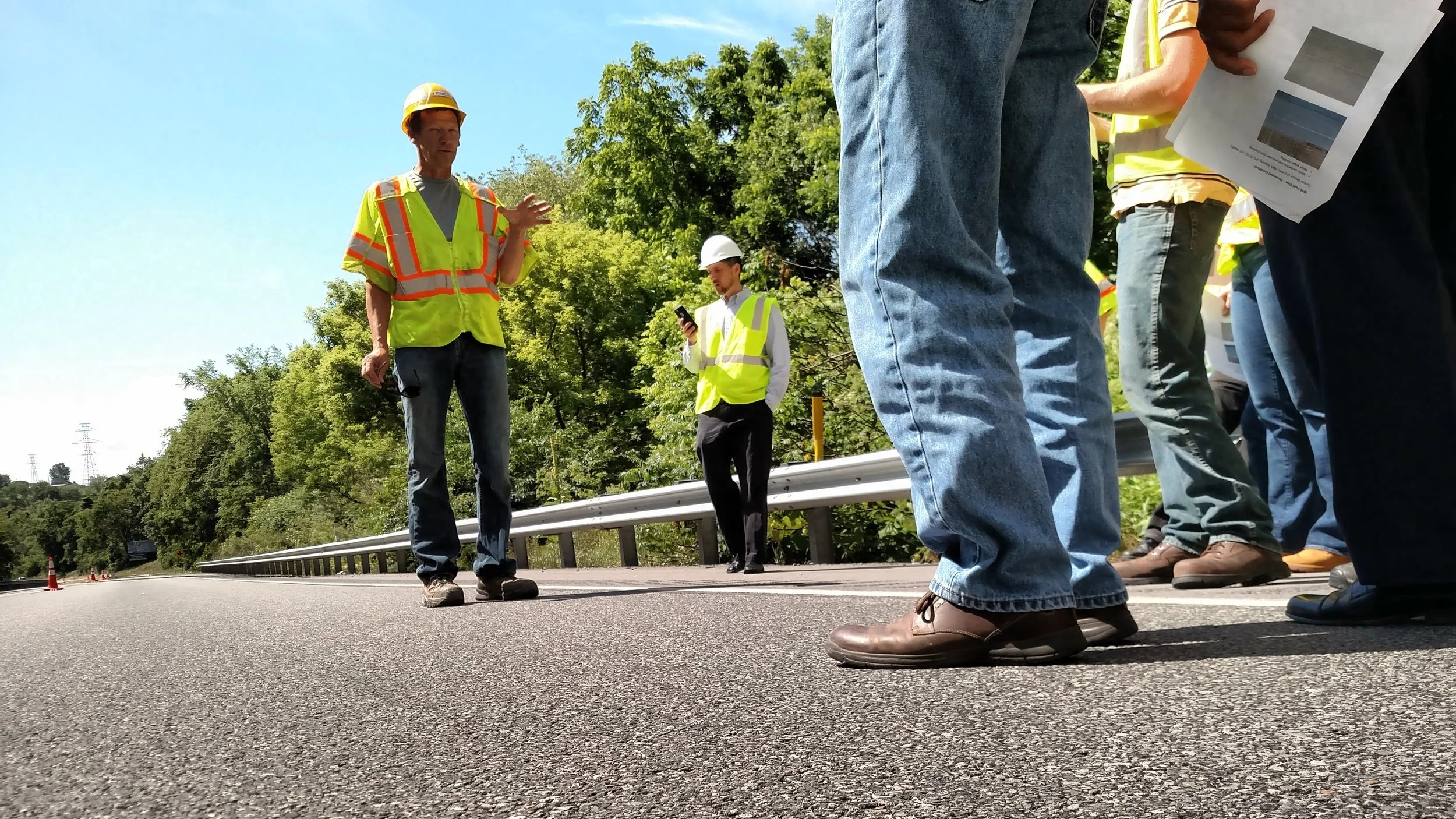
The FHWA has an ongoing interest in developing and deploying technologies to support improved concrete pavement performance and longevity. In support of these goals, the FHWA is conducting an indefinite delivery/indefinite quantity (IDIQ) project to promote and advance recommended best practices for the design, construction, repair, and rehabilitation of concrete pavements. Under Task Order 6 of the IDIQ, APTech supported the FHWA in implementing the new composite pavement system technologies developed under the SHRP2 R21 study.
Under this contract, we:
assisted four state highway agencies (SHAs) in the planning, design, and construction of new composite pavement systems and documented the project installations through detailed case studies.
worked with the California Department of Transportation to host a multi-state showcase on composite pavements that included a field demonstration of a two-lift concrete pavement project on I-210 north of Los Angeles.
developed comprehensive training materials on the design and construction of composite pavement systems and delivered it to highway agencies across the country.
worked with the Virginia Department of Transportation to organize and facilitate a multi-state peer exchange meeting to share knowledge on the applicability of and implementation strategies for composite pavement systems.
participated in various regional and national outreach activities to share information on composite pavement systems.

The Ohio DOT maintains 49,078 lane miles of highway, and has identified longitudinal joint failure of their asphalt pavements as a systemic weakness. To counter that, APTech worked with ODOT to develop guidance on how to choose the most appropriate longitudinal joint repair method and how to perform it effectively and at the optimum time to produce the greatest return-on-investment.
Our work included:
Evaluating the Ohio DOT’s current longitudinal joint repair processes.
Conducting a comprehensive study of longitudinal joint repair practices by other DOTs.
Modifying existing construction specifications and designer guidance.
Developing a guidance document to assist maintenance managers in making cost-effective repair decisions.
Developing a decision tree and treatment selection tool to be included in the Ohio DOT pavement management system.
Preparing a project report to summarize findings and provide recommendations.

WisDOT’s high-priority roadways require repairs to be completed during off-peak hours with minimal lane closure durations (typically 6 to 8 hours for night-time closures). These short closure times severely limit the ability to use many conventional cementitious repair materials and methods on their concrete pavements. As a result, WisDOT has typically resorted to using asphalt concrete or rapid-setting cementitious materials for repairs of PCC pavements, neither of which has consistently resulted in durable or long-lasting repairs.
WisDOT selected Applied Pavement Technology, Inc. (APTech) to evaluate the laboratory and field performance of selected non-cementitious repair materials they have been using over the last few years and provide guidance on the selection and use of these materials for concrete pavement partial-depth repair applications.
Our work included:
Conducting field evaluations of selected non-cementitious repair materials to document prevailing condition of repair materials and surrounding concrete pavement.
Conducting coring and non-destructive testing to assess the bond condition between repair material and underlying concrete pavement.
Conducting laboratory testing to study bond and dimensional stability of repair materials at various temperatures.
Developing project report to assist WisDOT in improving policy and specifications related to non-cementitious repair materials.
View the project report here.

For over 10 years, APTech supported the Federal Highway Administration (FHWA) in the administration of its Sustainable Pavements Program through two separate competitively bid indefinite delivery/indefinite quantity contracts. In this capacity, we were responsible for carrying through FHWA initiatives in pavement sustainability and worked with a broad-based team to accomplish them. This included:
seeking stakeholder involvement to help promote concepts of sustainability,
developing specific guidance on more sustainable pavement practices, and
sponsoring outreach programs and technology transfer activities to share the latest information on the FHWA’s program.
A number of key task orders have been executed under each contract for this program, each led by APTech and supported by a core group of technical experts who combine expertise in pavement design, construction, and materials with various components of sustainability.
Under the most recent Sustainable Pavements Program contract, seven task orders were issued.
Task Order 1: Sustainable Pavements Program Roadmap
We developed a strategic Roadmap to provide a 5- to 10-year strategic direction for the FHWA’s Sustainable Pavements Program. The Roadmap focused on pavement sustainability in the areas of design, construction, preservation, and maintenance of asphalt and concrete pavements, and was designed to:
Work within the broader industry context of improving pavement sustainability
Be guided by the Program’s current purpose (defined as being to advance the knowledge and practice of sustainability related to pavements)
Concentrate specifically on topics and deliverables through which the FHWA can have real impact given its current scope and authority. The Sustainable Pavements Technical Working Group (SPTWG) was engaged in the effort to provide stakeholder feedback.
Task Order 2: Establishment, Organization, and Coordination of the SPTWG
We coordinated and provided support for the SPTWG, a stakeholder group providing input to the FHWA on the program. We scheduled and organized meetings, provided travel support to eligible SPTWG meetings, facilitated the meetings, and documented the overall results and action items. A total of 11 meetings of the SPTWG were conducted from 2016 to 2021, the last three in virtual format.
Task Order 3: Technology Transfer Toolbox
APTech provided technology transfer support to the FHWA on the subject of sustainable pavements and materials. This support included:
Preparation of ten technical presentations on various aspects of pavement sustainability,
Development of three Technical Briefs on topics related to pavement and materials sustainability, and
Continued development, maintenance, and population of the FHWA sustainable pavements website.
Together, these various activities became a "technology transfer toolbox" that supports FHWA in sharing pavement sustainability information to the at-large highway community.
Task Order 4: Sustainable Pavements Case Studies
APTech developed a series of case studies that highlight sustainable pavement technologies that were featured in the program’s Reference Document. These were defined as a practice, procedure, or innovation with positive sustainability impacts, and a total of ten case study reports were produced: In-Place and Central-Plant Recycling of Asphalt Pavements, Use of Blended Cements, Sustainability Rating Systems, Perpetual Asphalt Pavements, Long-Life Concrete Pavements, Inverted Pavements, Superpave5 Asphalt Surface Mix Design, Stone Matrix Asphalt and Open-Graded Friction Courses, Concrete Pavement Texturing, and Use of Recycled Concrete Aggregates.
Task Order 5: Environmental Impact Benchmarking Tool
Under this task order, we developed a Microsoft Excel-based tool (LCA PAVE) to aid agencies in assessing, benchmarking, and communicating the environmental impacts of the materials and construction processes associated with new pavement construction, reconstruction, rehabilitation, maintenance, and preservation. The tool has the ability to consider a range of environmental impact indicators and generates a multitude of output summary tables and graphics, all of which can be presented in a report template that is customizable by the highway agency. The LCA PAVE tool plays a critical role in the U.S. Department of Transportation’s BUY CLEAN initiative.
The success of APTech’s work was recently rewarded with a new follow-on contract for LCA PAVE technical support, enhancements, and outreach.
Task Order 6: Sustainable Pavements Education and Outreach
We helped the FHWA advance the state of sustainable pavement practices through a strategic marketing and outreach campaign. A series of marketing and outreach materials were developed to educate stakeholders on pavement sustainability and encourage them to use resources and tools produced under the Sustainable Pavements Program. Some of these resources included:
Several Tech Briefs on Environmental Product Declarations (EPDs)
Two videos highlighting asphalt and concrete recycling, respectively, and
Several flyers and one-pagers on various sustainability related topics.
Two webinar series—one that highlighted ways agencies can improve the sustainability of their pavements, and one on the use of the LCA PAVE tool developed under Task Order 5.
Task Order 7: Pavement Resilience Guidebook
In this task order, APTech examined the role of pavement resilience in addressing a number of emerging climate stressors and developed a summary document describing the current state of knowledge, practice and future needs. This information in our report was based on:
Key national and international climate documents,
An FHWA approach to resilience,
The results of an unpublished literature review, and
The findings from two FHWA-sponsored Peer Exchanges on pavement resilience held in late 2020.

May 2021, New York State Department of Transportation (NYSDOT) selected APTech to update its risk-based transportation asset management plan (TAMP). The plan documents NYSDOT’s practices and planned investments for managing the agency’s over 38,000 lane-miles of pavement and nearly 19,000 highway bridges from 2022 through 2031. APTech is supporting all aspects of the TAMP, including technical expertise, coordination, documentation, and editorial and graphic design support.
NYSDOT’s TAMP also describes the practices and expected investments of the New York State Thruway Authority (Thru-way) as the entire New York Thruway is on the National Highway System. APTech coordinated between the two agencies to gather needed information from each and compile the TAMP. The resulting plan includes all NYSDOT and Thru-way managed pavements and bridges.

In 2019, APTech assisted the Alaska Department of Transportation and Public Facilities (DOT&PF) in developing the agency’s fully compliant, risk-based transportation asset management plan (TAMP). Following up on this project, APTech was again chosen to update the agency’s TAMP in 2022. The plan documents DOT&PF’s practices and planned investments for managing the agency’s pavement and bridges on the National Highway System (NHS) from 2022 through 2031.
APTech led all aspects of the TAMP development, including updating the documentation of asset management processes, financial planning, and life cycle planning. Since implementing the previous TAMP, DOT&PF has embraced the spirit of the legislation by updating its asset management practices and implementing new pavement and bridge management systems that use the National Highway Performance Program metrics to inform investment decisions. APTech assisted the DOT&PF by using these new systems to update its TAMP, including significant support to refine the agency’s life-cycle planning analyses for bridges.
The Bipartisan Infrastructure Law (BIL), passed in November 2021, requires agencies to consider extreme weather and resilience in its life-cycle planning and risk analyses. Alaska’s extreme environment requires considerable focus on resilience in all aspects of asset management and engineering. The revised TAMP highlights the agency’s efforts to understand the conditions to which pavements and bridges will be exposed to construct infrastructure assets that can withstand Alaska’s harsh environment.